Archive

MUSIC

If people come up to me after a show, they usually say something like ‘Good job!’ or ‘That was great!’. At Babyfreeze’s last gig at Smiths, three people independently came up and said ‘YOU GUYS BLEW MY MIND’. It was testament to the spectacular run of gigs we’ve had lately, which continued at The Phoenix last night. Driving home afterwards, I got the idea to attempt a potted (and digressive) history of the band.

I Drew A Picture Of You 

2008. Nick had written a clutch of electro-pop songs, and was casting about for a collaborator to record them. Meantime, I was fronting Cool Weapon, already making electronic music (and, umm, wearing red suspenders. We looked like droog firemen).
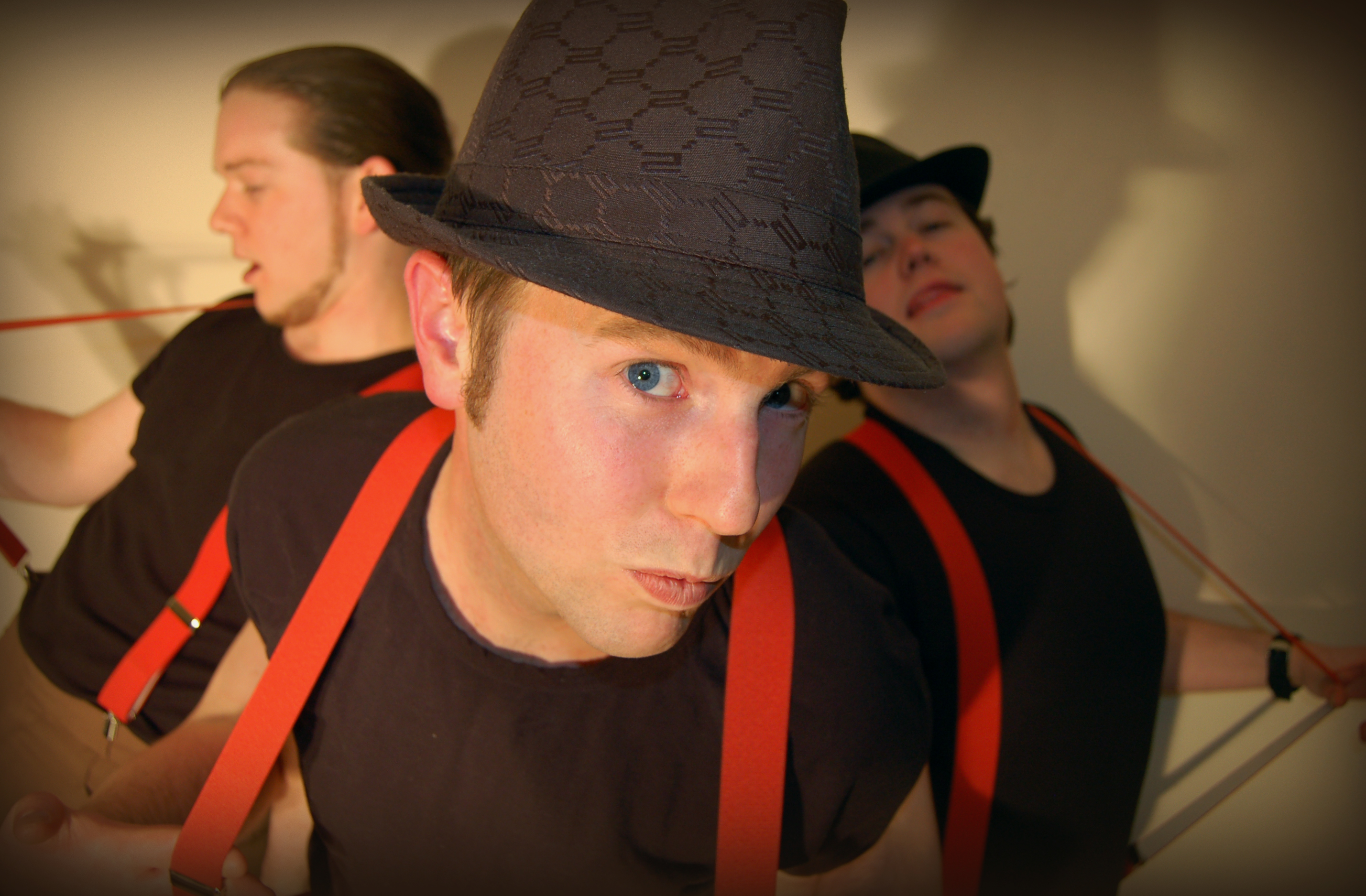
Cool Weapon

One week, I wrote a handful of songs that veered towards the Suicide/Peaches/Fad Gadget end of the electronica spectrum. While I presented demos of them to Cool Weapon, I already had visions of performing them solo (one – Interview Song – was recorded by Cool Weapon but never released). Recognising I didn’t have enough material for a full set, I shared them with Nick and we combined them with his electro-pop numbers to make the first Babyfreeze setlist (Nick came up with the name, taken from the breakdancing move).

Babyfreeze - Gear

I arrange all the songs on my drum machine, the BOSS Dr. Groove DR-202. Determined to become Queanbeyan’s answer to Beck (it was circa 2000), the DR-202 was my next purchase after a guitar and four track recorder.  Which is to say, I’ve had it forever – it’s probably the instrument I am most comfortable with.  While I use it extensively on demos and home recordings, I’d never performed with it live before Babyfreeze. Its limitations became our signature (you can have any sound you like… as long it’s drums and bass). Combined with a KAOSS pad, and a smattering of saxophone and guitar, we were ready to gig.

Keep Going No It Hurts

Babyfreeze at Bar 32

Our first gig was a Thursday at Bar 32, one of the infamous Gangbusters nights.  We wore keyboard tie t-shirts, and I unveiled my pink luchador mask (now forever linked to my El Lukio persona). We got a great reaction from the small crowd. In one of the oddest moments of kismet I’ve experienced, following us was also a debut punky electronic duo where one member wore a pink mask. It was PARTYBUS, who became our new favourite act.

Partybus

Playing the drum machine is freeing as a performer – mostly, I only have to mute/unmute various sounds and cue up the next loop. I spend the rest of my time dancing or adlibbing back-up vocals – I imagine it’s similar to how Bez feels.

Babyfreeze - Polo

Nick and I have rarely mixed music and politics, but the plainspoken pro-equal marriage banger Single Sex Couples is a glorious anomaly. The song is one of my favourites, and played a big role in defining the band’s persona. It’s been in our set since the start, and it’s shameful that it is still relevant today.

A few gigs in, we asked Paul Heslin to produce our first album (my first time working with the boy genius). Stretched out on the floor of Nick’s living room, we recorded all the tracks in a day. Paul took away the recordings and added heavy reverb and electronic wizardry (he was going through a Martin Hannett phase). I’ve always been pleased with these tracks – they’ve got a unified and enviably dank sound. We tentatively planned a release (I wanted to sell pink and black balloons with the tracklist and a download code written on them), but didn’t arrange it before I moved to Cairns a couple of months later.

One of the last songs I showed Nick before I left was Worked Up – Nick and I had been riffing one day when he described Babyfreeze as ‘po-mo homo electro’. I took it as a challenge to compose something for this microgenre, and came up with a busy drum’n’bass track detailing a fictitious gay crush and rendezvous. Performing it is probably the closest I’ll get to being David Bowie.

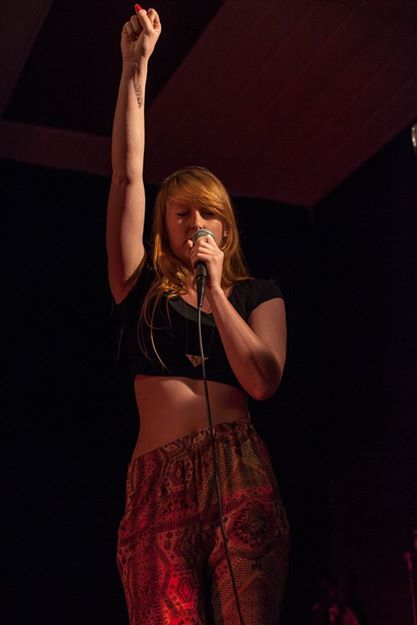
It was three years before I moved back to Canberra.  Babyfreeze was on hiatus, but Nick and I still collaborated on and off. I wrote four or five afrobeat-inspired instrumentals while in Cairns’ tropical climes – Nick added lyrics and vocal melodies. They were never meant for Babyfreeze per se, but one – Salt Is No Liar – has become a mainstay and high point of our live set (especially when Julia Johnson is available to sing co-lead).
Babyfreeze - Julia Johnson

Baby I’m A Golden Guarantee

Phase two of Babyfreeze kicked off when Nick Peddle, Canberra’s favourite drummer, joined. Dubbed ‘Face Face’ by Nick, Peddle breathed new life into the songs and made them rock ten times harder. Here’s proof – the first song of our first gig back.

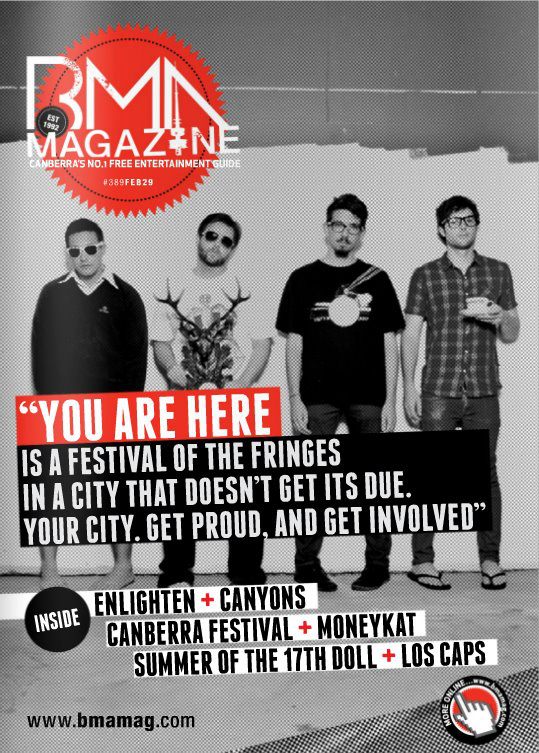
Just two weeks later(!), we landed on the cover of BMA, to promote the You Are Here festival.
Babyfreeze - BMA

For the photo shoot, we were told to dress like ‘hipsters’ – I hadn’t realised the term was so specific, and ended up the odd one out (I’m pretty much dressed as Corey Worthington). Regardless, it was surreal.

At the same time, I started to get itchy about making films (I have no idea where this urge came from, but I’m glad that it did). My need to start making films was so dire, I unearthed Lou’s discarded iTouch (I didn’t own a smartphone until late last year), and started using Babyfreeze as a testbed.

Once I purchased a ‘real’ camera, the first thing I did was make a video for Babyfreeze.

More clips followed after Nick suggested Babyfreeze make a Christmas ‘video EP’. I loved the subversiveness of it (it’s not exactly Metallica doing a Christmas album, but it’s still an unexpected diversion). We covered a favourite Christmas song each (Ramones’ Merry Christmas (I Don’t Want To Fight Tonight) for me, Prince’s Lonely Christmas for Nick), and recorded Nick’s brilliant Christmas Number One. I’ve blogged about the videos before – the only update is that while the others notched a couple hundred views, Lonely Christmas racked 9,000… before Warner Bros. had it taken down. A shame, and I’m sure if Prince himself actually heard it, we’d be in Paisley Park jamming right now.

Babyfreeze - YAH

When I See You Boy I Just Want To

People always comment on the chemistry Nick and I have onstage. It stems from being friends and playing together for so long, but part of it also comes from Babyfreeze being our perennial side-project.  This isn’t the band where we fret over arrangements or trying to get everyone to rehearsal; this is the band where we get up and just have fun. The kind of band where if the sax breaks, we just stop performing with sax, where if the guitar’s out of tune, we play it louder (our gear is rapidly breaking down – I’m dreading the day the DR-202 gives up the ghost).

We’re also both hams, but in Babyfreeze it manifests in different ways. I stay hunched over my drum machine, dancing and singing to myself, lost in reverie. Nick stares down the audience, performing acrobatics, jumping and lunging across the stage. Meanwhile, I’ve also developed this habit of singing along to all of Nick’s parts – not into a microphone or anything, just for my own benefit. I’m not sure what an audience makes of it, but for me it’s like being in the band and performing karaoke at the same time.

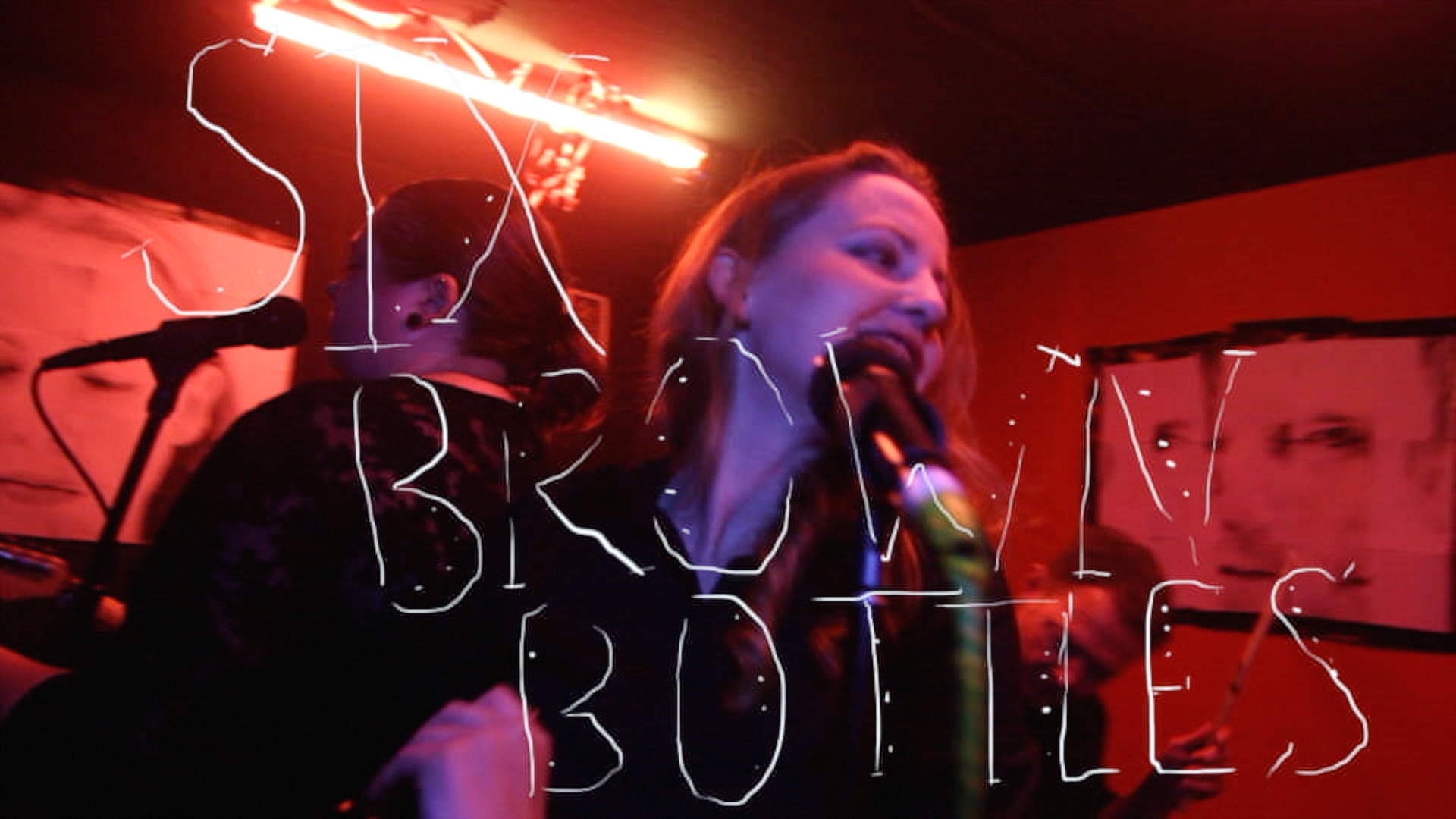
Babyfreeze- Smiths

We’re now recording a new EP, again with Paul, and roping in some esteemed musicians to slather the lean arrangements in gold. This next chapter is shaping up to be the best.

Photos (mostly) by Adam Thomas.

I’ve begun work on a theatre/music hybrid. The project came from a conversation I had with Mel and Lou after an FFA performance. Mel proposed I write some cop show-themed songs –  from there, it freewheeled until Lou epiphanically suggested the band host a murder mystery party. I’ve never played Cluedo or been to a murder mystery night (still haven’t!), but I could instantly picture a gig structured around the format. Lou spruiked it the next day to the YAH gang while we were at This Is Not Art, and I followed up later with a written pitch. It got accepted into YAH 2015 a fortnight ago, and I’m now madly pulling it together.

I don’t want to give too much away just yet, but here’s a sentence from the pitch:

L’Assassiner de Faux Faux Amis is like an episode of Scooby Doo written by Jean-Luc Godard – a pulpy whodunnit, splattered with existential digressions on death and the power of pop songs.

I finished the first draft last week (‘draft zero’ as I’ve dubbed it because it doesn’t include the songs). Zero was needed ASAP for me to see if the shape and structure is going to work, but also so I could present something tangible to the band. Speaking of, the band won’t strictly be Faux Faux Amis – it will be a composite of our usual line-up with ring-ins and special guests. I love playing with new musicians, so I’m buzzed by the prospect.

Luke McGrath - l'assassiner

There’s a lot of heady ideas packed into the show – existentialism, world mythology, ritual and the role of art. Some is overt, but most is bubbling under the surface – I wrote pages and pages of material, of which much is condensed into a handful of declamations (it brought to mind Thom Yorke writing scores of lyrics for one section of Paranoid Android, which he eventually summated into “when I am king you will be first against the wall”). It’s also heavily (HEAVILY) influenced by Nick’s productions of The Last Prom and Bomb Collar, both works where he deftly explored the Big Questions with humour, pathos and catchy tunes.

My favourite phase of any project is the first – some call it research, I think of it as ‘filling your head’. It’s the gathering of ideas, however disparate, and smashing them against each other. Everything I read, listen to, or watch is examined for its inspiration and possible interpolation. This includes movies I’ve sought out for context (Clue, Murder By Death), books I’ve happened to be concurrently reading (The Bulletproof Coffin, Season Of The Witch), and even seemingly random events (a man on the bus removed an exercise book from his backpack and held its scrawled notes up to the window as if consecrating the pages with sunlight – how could I not find room for that in the show?).

Kevin Lauro - l'assassiner

I’m about 50% of the way through the songs – I’ve got riffs or chords for each, an idea of what they need to achieve at their particular juncture in the show, and their subject matter. The lyrics are coming together but I never like to rush lyrics if I can help it… hopefully I have an inspired Christmas break!

Faux Faux Amis - Luke McGratj

I’ve now directed around a dozen music videos. Beautiful people have made futuristic love on my dining room table, I’ve tailed a dapper puppet as it wandered the streets of New York, slapped a woman in the face with a fish, and tarred and feathered a young man in a forest. And I’ve done it ALL FOR ART.

Among all these whimsical creations, I’ve neglected to make a straight-ahead, sweaty, ‘band playing in a room’ rock clip. Consider this my entry into that illustrious canon.

Faux Faux Amis - Luke McGrat

Faux Faux Amis - Luke McGrat

We filmed in our regular rehearsal room at Redsun Studios (say that five times fast), but I knew we’d need to tart it up a bit. Fans of the band will recognise the portraits as stills from our live projections. I rasterbated and printed all the ‘big heads’ the day before – well, except Kev’s, whose portrait debuted in our last video. Lou and I then had to piece them all together on the day – each consisted of around 15 A4 pages that needed to be arranged and stuck together face-down. Kev’s portrait was before we’d ironed out our technique, and we got the ordering wrong. I kinda like that his is the Picasso of the lot, especially since it was the only one to be recycled.

Faux Faux Amis - Luke McGrat

I’m a sucker for dramatic, colourful lighting, from Wong Kar Wai’s films through to Blackstreet’s No Diggity. We jerry-rigged the lights by taping red cellophane over the room’s fluorescents, then threw a blue gel over the camera mounted LED ring. I love the combination of the two colours, further heightened by the smoke we liberally pumped into the room (courtesy of friend-of-the-band Joel Barcham’s fog machine – thanks Joel!).

Faux Faux Amis - Luke McGrat

Faux Faux Amis - Luke McGrat

A technique I got to try on this shoot was to mime to the song playing at half-speed and then speed back up the footage in post. At half-speed, the song sounds like jokey doom-rock (least it was funny to us on the day). The sped-back-up footage has a manic energy to it, and also allowed Lou (camerawoman and bedrock of this operation) to cover a lot more distance in her tracking shots (essentially, she could circle the band twice as many times). The clip that gave me the idea is Vampire Weekend’s excellent A-Punk (I imagine half-speed Vampire Weekend just sounds like Animal Collective).

Faux Faux Amis - Luke McGrat

The final stylistic affectation is the animation. I’ve gushed before about my love for Ruff Mercy– I’m hoping he’ll interpret my crude imitation of his style as flattery. The clip consists of around 1800 frames – I reckon I drew over at least two-thirds of those. The animation amplifies the already unhinged vibe of the piece.

Faux Faux Amis - Luke McGrat

The first three FFA X videos have been completed!

This clip is a collaboration between Matthew Borneman and myself. Matt spent time in London working in the fashion industry (for photographer Mario Testino no less), and really wanted to do a clip lampooning the “fashion film”. I wasn’t even aware there was such a genre, but Matt gave me a quick education on Youtube. The arty angles, endless credits, talcum powder and gauze netting were all directly lifted from fashion films (and Matt’s brain).  The idea is FFA is merely the soundtrack to a fake auteur’s masterpiece – in going along with the conceit we created a new Youtube account and uploaded it anonymously. I love how it gets into a groove in the first thirty seconds or so, and then is crammed with another three setups in the final half, each more preposterous than the last.
This clip is by Danny Wild of ZONKVISION. I met Danny at You Are Here 2014, where he curated a mini-festival of one minute films. Danny’s style – and interest in brevity – seemed a natural fit. This slacker-fi gem latches on to the songs’s refrain “take me away from here”, presenting a world full of teleportals in innocuous public spaces.
Mel had the idea to shoot a karaoke based clip. Originally, the band was to perform it in a karaoke booth. I thought it might be fun to have a couple of kids (my nieces!) stumble upon the song on SingStar. As you’ll see, it emerges from a mystic Gameboy, which gave me the chance to indulge in some 8-bit design. And Stan makes an appearance, trainspotters!

Collar 1So Bomb Collar is a 45-minute one-man theatre show built around 8 songs. It’s set in a future world where humankind has colonized the deep ocean but has also begun to recede on a genetic level. The ability to sing and keep rhythm are just two of the traits that have almost disappeared completely. War has become a fashion/nostalgia movement in which revolutionary armies supplant each other with the frequency of clothing or music trends.

In one of the dingier corners of the Deep Sea, a man who bills himself as the last singer alive gives a concert/pep rally for one such revolutionary army. He wields a folk songbook that descends from the pop music of today, and plays what may be the last musical instrument in existence. He has a bomb strapped to his neck, a legacy of his violent past that could go off any minute. But within that already-complex set-up, there’s something else going on.

So. Why?

About 18 months ago I came across this:

There’s a longer version online but I haven’t watched it, I don’t want any more context. Just that character, defeated and funny and bitter. For a long time I’d wanted a mechanism to write a set of incredibly sad, big singing ballads, and I thought this character could be it.

I also wanted a project that forced me to step up my acting and audience-connection chops in a major way (I have a very crude approach to getting better at things- I write a project that requires new skills and then just try to have them by the time it’s time to perform. As a strategy I’d say it’s usually about 75% successful).

I also wanted just one show I could do without having to organize anyone else.

I didn’t want to do a ‘period’ show of vintage-style songs, so the obvious other way to go was to set it in the future (meaning in it’s own way it is very much a period show). The initial idea was a sort of King Kong riff, the last singer alive held prisoner and forced to perform as a human curiosity, singing his grief and loss to a callous audience. The final show has changed a lot , in a way that’s opened it up to be about quite a lot of things- perhaps too many things, but that’s for an audience to judge and I’ll refrain from further spoilers in the hopes that you’ll come see it.Collar 2So I don’t know how it works for most one-man shows, but this one took a pretty big team to put together. I started by shooting the shit about it with my friend Dave Finnigan, who asked me a dozen astute questions about the story world and told me that I’d have to write a lot of stuff before I got this right (Dave, I promise that I kind-of mostly followed that advice). I then took it to professional dramaturg and renowned e-mail poet (that’s an in-joke) Peter Matheson, who as always cared about one thing, who was the character and why should we care. Pete was rightly dubious about me leaping from done-a-bit-of-acting into holding down a whole show by myself, but he gallantly assisted me in beating out the basic structure.

I pitched it to Crack Theatre festival, a festival of new and experimental work, without having written a word or a note. I figured it was a long shot to be accepted, but I didn’t account for the fact that it was a pop-up festival producers dream- a show specifically designed to be done in a dingy bare space in which all the tech is provided by the artist.

Oh yeah, that’s the other thing. Somewhere along the way I decided that all the music, sound and lighting affects would be generated by an aggressively lo-fi device incorporated into my costume. It fit in with my idea of a super-portable show, it fits metaphorically with the predicament of both the character and the story world, and it felt like an approach which mirrored the lack of resources I was bringing to the table as a performer (can sing pretty well, limited as an actor, think I can dance better then I can).

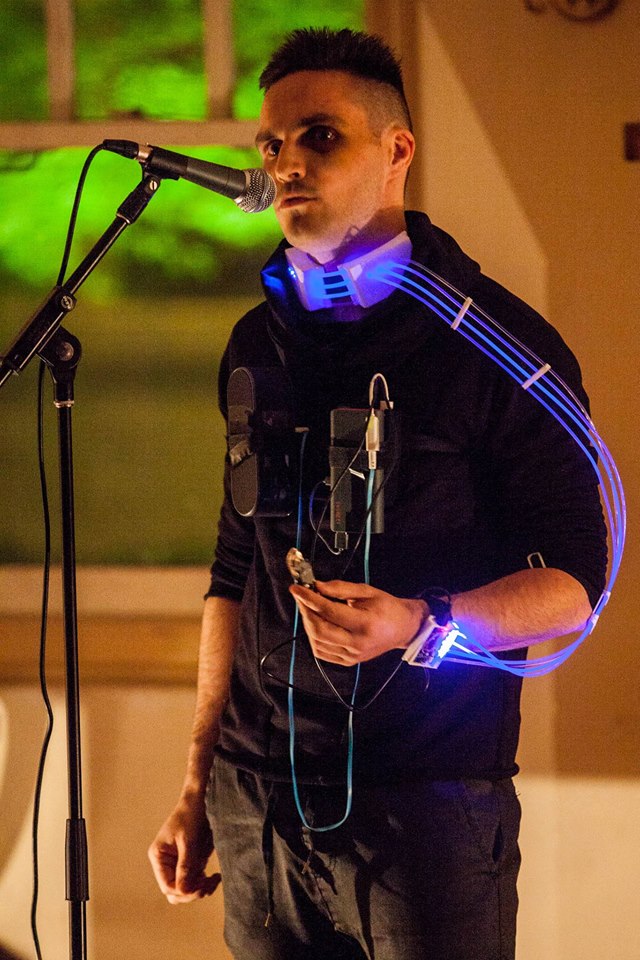
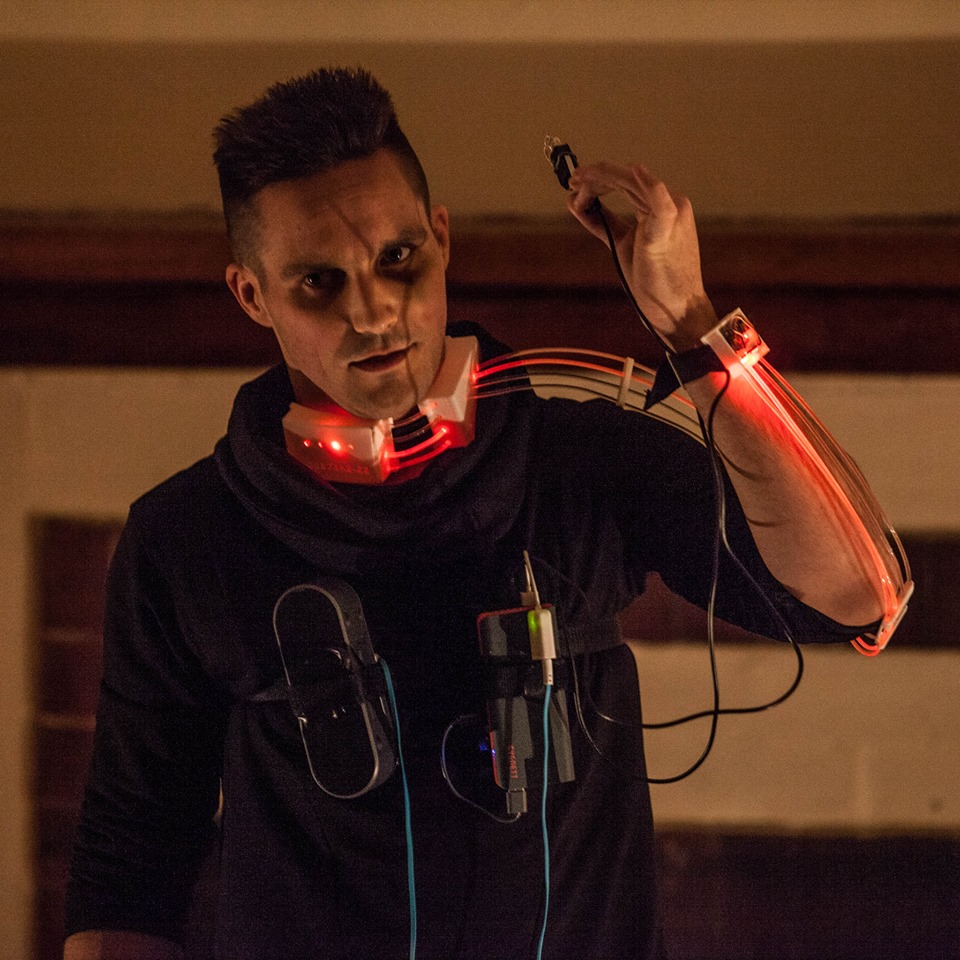
The ‘last instrument on earth’ was created by sound artist Paul Heslin, and is a little clip control triggering sound files from a Rasberry Pi computer strapped to my chest. Getting Paul to make something like this was the equivalent of making him work with one hand behind his back, he could have made something much more involved and ‘playable’ but I was determined to have the most idiot-proof (read: Nick-proof) system possible, at least for these first shows.

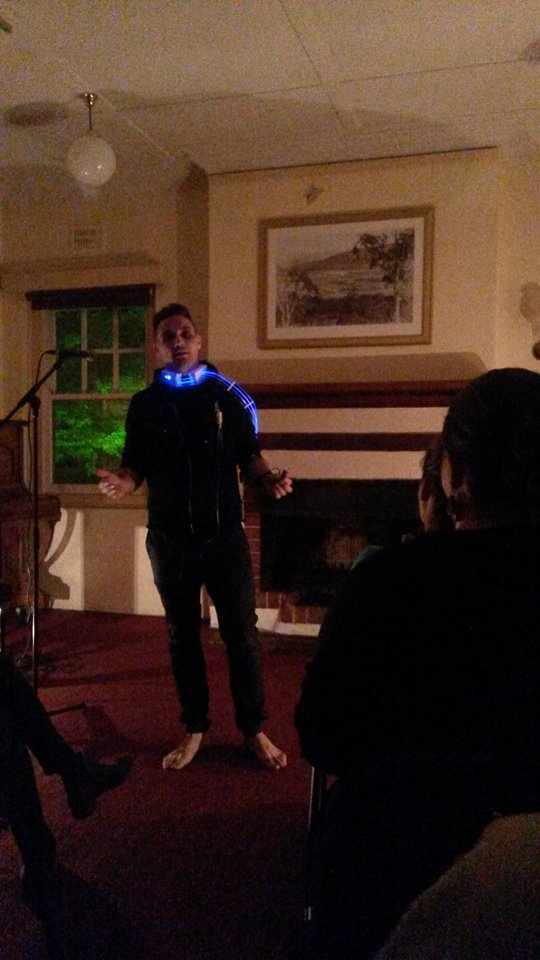
ACT Hackerspace supremo Adam Thomas (who also took these lovely photos of the sneaky preview run-through I did at Gorman House) designed and made the collar and the lights, and he and Paul ended up working closely together so that the whole thing ran off of the Pi as a single rig. They made something that just worked 100% of the time and that a techno-imbecile lie myself could operate easily, the show couldn’t have worked otherwise.

Collar 3I asked a couple of people who they thought I should approach about directing and they both suggested Emma MacManus. If you don’t know Emma through her work with Applespiel then that is a loop you should be in. Emma was unbelievably patient with me, she’s used to working with proper actors as well as being one herself. On a 6-week turnaround, she helped me get the script and songs in shape, then with just one week of face-to-face rehearsals took me from a twitching bundle of nerves pacing around the rehearsal space to a mostly-coherent 45 minutes of show. The fact that any of my intended themes and story points got across to the audience at all is down to Emma’s hard work, and I’ve learned tons from her about tone, pacing and clarity. She also got me to make some small practical concessions to my ‘no external tech’ rule (a spotlight and a microphone. The mic ended up being completely essential when I got sick the week of the shows and had to battle some voice stuff)

The final member of Team Bomb Collar is my go-to music producer Sam King. I made him build the tracks with me in the most annoying way possible- first as vocals over basic beats with some notes picked out on a bass to indicate the changes, then we built up the ‘middle’ of the tracks while attempting to stick to a rule of no more than three sounds per track (not including  the vocal). There was a common thread in this project of me forcing super-talented artists to do stuff in a dumb-down, long-way-round fashion.  We mostly used electronic noises, with a few deliberately weird exceptions.

Once I was servicing the needs of the story the idea of all the songs being sad ballads went out the window. The eight songs I range a fair bit in style and tone, and I feel like every one of them has a solid narrative purpose in the show (if you’ve seen it and you disagree let me know!) Melodically and musically they aren’t a big departure from my normal peacock-pop style but as far as the lyric and production I’d say that they are, if not the weirdest, then certainly the most weirdly specific tracks I’ve ever made.

Crack was the perfect place to debut the show and I was well looked after by the production team. They put me in store-room full of empty boxes, with actual pigeon feathers on the ground. The audience had to cram in and sit on the floor. It was exactly what I had wanted, and of course I’d left myself no place to hide, I had to try and keep people engaged for the full run time.

I knew the weakest part would be my performance. Over the three shows (counting the preview show in Canberra) I improved significantly, but there’s still a lot of improvement to be made in terms of inhabiting the character, making the tonal shifts, getting story points across in a way that properly lands and keeping my legs from shaking nervously all the time. There were odd bits that I did quite well, which was nice, and the Crack audience was savvy and generous, they did a lot of the heavy lifting for me and gave me the space to have a lot of fun with it.

I made some tiny tweaks to the script across the performance but on the whole I’d say that part was working pretty well. The tech worked like a charm and I’d like to let Paul and Adam off the leash to add a couple more ideas to it for next time.

I feel like I’ve made something purpose built for fringe-y pop-up festivals so I’m gonna look around for the next place to stage it.

Thanks also to all of the friends who came to see it and provided absolutely vital feedback, you have made the world better for future audiences!Collar 4

BC FireplaceOkay, the preview showing of Bomb Collar was last night (I ran it through in front of 30 good friends as a way to get past my nerves and see where it’s at). It debuts 9.30 this Saturday night as part of Crack Theatre festival. So I guess it’s time to reveal what the hell it is!

Bomb Collar is, for want of a better term, a one-man science fiction cabaret show. It stars yours truly as The Last Singer On The Face Of The Earth, in a dystopian future where mankind is genetically recessive and traits like musical ability have eroded away. He is giving a concert for the revolutionary army who keeps and protects him, but he still bears the legacy of a violent tragic past in the form of an explosive that’s stuck around his neck. He could, in fact, explode at any time..

I’ll get in-deep about the whole show and my process on the other side of Crack, but suffice to say that a one man show is above and beyond any challenge I’ve previously set for myself. It’s been super-daunting, and last night’s performance showed up a bunch of stuff that still needs work (thanks to my savvy and generous preview audience!) but it was also a lot of fun to do and I’m raring to see how it goes over with an experimental theatre crowd.

If this comes off it’ll be down to the amazing efforts of director/dramaturg Emma MacManus, music producer/arranger Sam King, and the incredible team of Paul Heslin and Adam Thomas who have built the very unique sound and light rig for the show.

Above photo by my friend Ali Goward. Come see me this weekend if you can, otherwise I’ll see you back here!

Nick: So I went to Luke’s place for dinner last night and pretty much as soon as I got in the door he surprised me with this, the final of five videos for my EPINADAY. I’d pitched the basic approach for this one (and written the ‘dialogue’ and ‘where-are-they-nows’) but Luke took it above and beyond. It’s easily my favourite of the five.

Nick Delatovic Luke McGrath

This was another song that I used to play with Big Score, and the arrangement owes a lot to Big Score’s Beth Monzo in particular and Nick Peddle. They were the ones who first turned it from an indie chord-chugger to the afrobeat-ish shuffle it is now, so having Nick drum on this take felt like a nice tribute to all those sweaty pub gigs we’d shared.

I don’t know if this is one of my better songs or not but it’s definitely one of my favourites. I wrote it in my early 20s, I used to write a lot of songs from the perspective of an old man back then. Probably a perverse desire to avoid the normal young-person concerns, or maybe just an attempt to ape all the Old Fogeys Of Song that I love so much.

Nick Delatovic Luke McGrath

I had a strong hunch that I’d be personally very satisfied by this project, but I’ve been humbled by the positive response I’ve gotten from those that have watched the vids. Thanks again to the Rogues Gallery who helped me achieve this: Sam King, Julia Johnson, Matt Lustri, Nick Peddle, Shane Parsons, Adam Thomas, Leon Twardy, Adelaide Rief and Luke ‘Beyond Rebuke’ McGrath!

Nick Delatovic Luke McGrath

Luke: Huzzah, the final EPINADAY video!

To begin with, I cut together a performance of the song as per the previous videos. With that as a base, I layered the collateral footage over the top  – with the exception of a couple of brief moments, it completely subsumed the actual performance.

Nick Delatovic Luke McGrath

We wanted to impart this last video with a ‘behind the scenes’ vibe. I consciously left in the bits I would normally edit around – camera wobbles, refocussing and the like – as well as the less guarded moments from the musicians. Combined with the warm film look, it feels like a home movie, perfectly suiting the wistful tone of the song.

Nick Delatovic Luke McGrath

Overall, the five videos totalled around 20+ hours of editing.  As with nearly everything I do, it became a larger task than I anticipated (my skills at gauging time and effort are severely underdeveloped – the silver lining being I jump blindly into a lot of ultimately rewarding endeavours).  Having space between each editing session was a bonus – it allowed me to consider each edit independently, to experiment and choose something that suited the individual songs.

Nick Delatovic Luke McGrath


Cracked Actor Hollywood

Very chuffed to link to this post- http://messandnoise.com/news/4671517- from Mess and Noise about Hollywood, the second single form the forthcoming Cracked Actor record.

Cracked Actor is the only band I’m in that I don’t write or Frontman (I play bass) for so I kind of feel like as much a fan of the band as a member.CA’s illustrious singer/writer Seb has always been a widescreen-vision type of guy but he’s outdone himself on this new album. I’ve never worked with anyone who’s been able to contain such a complex and specific (and excellent) vision across all the metrics of recording (song, arrangement, performance, production) and keep it so close to what he wants. He and our drummer/sonic know-it-all Graham have been sweating the details of this one for almost a couple of years now (ably abetted by Producer-To-The-ACT-Stars Sam King) and unlike a lot of records that take this long I feel like you’ll hear every moment of care on the finished article. These guys are also the most ruthless song editors I’ve ever worked with, which has had a big influence on my own writing.

The link has all the info about our little single tour that;s happening over the next six weeks. If we’re playing close-by to you please drop in and say hello!


Nick: The other three EPinaday songs have all had previous lives in bands that I’ve played them with. This track, whilst it’s been kicking around for a couple years, had never been performed live or even rehearsed by a band before. For that reason it feels like the most honest expression of the arrange-and-record-in-a-day concept.

In writing terms it’s pretty straight-up Nashville country in the Cash and Carter tradition. Boxing matches are a metaphor I seem to keep coming back to, probably because of all the great terminology that exists in the sport (plenty of my trademark apocalyptic imagery sneaks in too). Musically there’s a certain gleeful dumbness to the chunka-chunk chorus that we all leaned into. There’s a 7th chord in there among the usual major chords, which makes it practically jazz by my standards.

SEEING STARS 3 - 6

Luke: After the multi-cam extravaganza of World Of Hurt, and the demure black and white of Lake George, I was at a loss for how to approach Seeing Stars.  Quick edits? Lots of inserts? More of the same?

Nick provided me with the key – he said (and I’m paraphrasing), “It’s a country song, innit? So go punk with it. Blank Generation. Them bleedin’ squares won’t know what hit ’em”.  Blank Generation is a touchstone between us – 16mm unsynched black and white reels of bands playing CBGBs in the late 70s. It’s essentially home movies, some of bands that became the biggest in world – Blondie, Talking Heads, Patti Smith, Ramones, and others that became cult favourites – Television, Wayne County, Tuff Darts, to name a few. Put simply, it’s the coolest footage ever filmed.

SEEING STARS 3 -5

I didn’t go Blank Generation on Seeing Stars. But the suggestion freed me to not be so precious with the footage. I wanted to do something similar to this video of PROM, to recast it as a long-lost VHS nasty. With that as a starting point, I put together the ‘interrupted transmission’ intro, to indicate a clean break from the slicker videos that came before (the dubbed Spanish sitcom dialogue was a perverse piece of whimsy).

SEEING STARS 3 -1

There is a veneer of TV static over the footage (though not as extreme as Nothing But Flowers), and then from there, things get… weird. The doubled footage, the squiggly black lines, and the day-glo colours were the result of a fun morning of experimentation (which also yielded hideous Rubber Johnnies like this):

SEEING STARS 3

To me, it’s come out quite psychedelic, and I like the idea of both Nick and Julia seemingly singing this duet not to each other, but to mirrored versions of themselves.

SEEING STARS 3 7

My favourite moment though is when Sam King’s head disappears – it’s like there’s an invisible lake in the middle of the frame – his topknot bobs above a moment before sinking completely.  Beautiful.

SEEING STARS 3 - 3

Deep Sea

We’re about 5 weeks out from Bomb Collar, the show that I’m writing and performing for Crack Theatre Festival. I’m not quite ready to spill the beans on this one, but suffice to say that I’ve had to generate a fair bit of story world material which won’t end up featuring in the story itself. The following is a historical timeline that I wrote leading up to the first moment of our show.

Bomb Collar Backstory Timeline

Curtain minus 105 Years– The song ‘Battle In Heaven’ by Adara Spread becomes the highest selling unit of entertainment in history. The song is heavily criticized for it’s glorification of armed conflict but is almost universally embraced by the dominant 8-20yr-old age bracket. Illegal re-interpretations of the song generate a cottage industry that effectively becomes the world’s 6th largest economy. 73% of all music heard in this, the last meaningful year of capitalism, is ‘Battle In Heaven’.

Curtain Minus 100 Years- Public panic over info-virus’s and artistic pollution lead to a resurgence in nationalism. Entire populations retreat into firewalled ‘thought reserves’ separate from the public internet. Cult political figures find themselves holding influence over tens of millions of people, most notably Fillip Despin and his ‘Golden List’ of acceptable and safe culture.

Curtain Minus 95 Years- The aggressive decentralization of knowledge has led to massive global interdependency, with many manufacturing practices only known in specific geographical locations. Mass shortages of sanitation gels and temperature control shakes lead to civil unrest among the Deep Ocean Colonies. Christian refugees from the Continents bring rumors of genocide. The thought reserves, once giant echo chambers of re-enforced opinion, splinter off into their own dissenting groups.

Curtain Minus 90 Years- 1.2 billion people are wiped out in the Golden March, executed for their cultural, artistic and religious beliefs. A vast Oceanic Alliance rises up in response, as if to fight one last great war, but it is too late. The global manufacturing chain fatally damaged, both sides of the conflict collapse under their own weight. The war over, local political and military leaders are forced to broker their own peace treaties, usually too late to avoid mass devastation.

Curtain Minus 80 Years- In the wake of the Failed War, an international movement of pilgrim technicians (‘Panners’) travel the earth, trying to piece together as much lost technical and practical knowledge as they can. Much of said knowledge is lost, but over a decade of effort the Panners are able to retain and restore basic living conditions in most of the Deep Ocean Colonies and the majority of the Continents. Most fast methods of Global Travel have become the preserve of the wealthy or powerful, making their job all the more painstaking.

Curtain Minus 60 Years- With most of the Firewalls negotiated away, the warped and skewed knowledge bases of the Thought Reserves become the basis for mainstream culture. The tenets of each Reserve sit in violent dissonance to the others, leading to bitter cultural conflicts and mass segregation along ideological lines. These warring ideologies eventually infect the Panner population as well, leading to the gradual erosion of this global movement.

Curtain Minus 45 Years- Worldwide communication and trade shrinks to a relative minimum due to ever-increasing ideological schisms. Art and culture from other societies is treated with hostility and skepticism, and each community retains a tightly confined suite of images, songs and stories that are agreed upon and sanctioned. Dissident artistic depictions become extremely rare, having been violently oppressed for years.

Curtain Minus 30 Years- The Deep Ocean Colonies slip into feudalism, dominated by a popular culture which glorifies warfare and expansionism. The extremely degraded state of all travel technologies creates a significant drag factor on these military campaigns, as does the armies’ low level of martial competence. Many of the the smaller settlements are allowed to live in peace for years before being attacked, many of them taking steps to prepare, some choosing to evacuate.

Also, Our Protagonist is born into one of the absolute smallest of the Deep Sea Colonies, a place know as Gales Edge.

Curtain Minus 5 Years- Scilly is taken by expansionist forces. Due to incompetence and mis-communication at the leadership level the people of Gales Edge are wiped out instead of subjugated. Our Protagonist is, as far as he knows, the only survivor.