Archive

FILM

It’s been over a year since I posted about Kithara – at the time, I intended it to be my debut film.  A silent black & white two-reeler, I imagined it as a stepping stone into larger, more complicated projects (it wouldn’t require location sound or sophisticated colour grading, for instance).

The project stalled after a couple of meetings with the actors/brains trust I corralled to be involved.  I got hung up on trying to incorporate all the (valid and insightful) suggestions they provided on character motivation, story structure, film theory and more.  Naturally, I wanted Kithara to be perfect, but trying to retrofit all these ideas onto the story proved impossible for me.  The clay refused its mold.

In the end, it got pushed to one side.  Like Raymond Chandler said, “the more you reason, the less you create”.

It took me a stupidly long time to realise the movie didn’t need to be perfect.  Some of my favourite movies are riddled with baffling logic and lapses in judgement.  What movie, however canonical, is truly perfect?  There is too much chance involved in achieving even near-perfection (as anyone that knows the history of Casablanca can tell you).  Conversely, aren’t flawed films often the most intriguing?

Kithara will be an imperfect film, and I am happy about that.  That simple conclusion is freeing.

My driving creative philosophy is best put in the The Cult of Done manifesto, “done is the engine of more”.  Getting Kithara done will lead me to the next thing.  The experience gained is as important as the end result.  I’ve reworked and improved the script, I’m storyboarding at present, and looking to shoot by the end of the year.

Ironically, what started as a ‘stepping stone’ is now relatively ambitious – recently I’ve been reaching out to actors, make-up artists and costume designers.  The end result will be lush, beautiful and dreamlike – a perfumed handkerchief in a field of shit – to borrow a phrase from The Extremist.

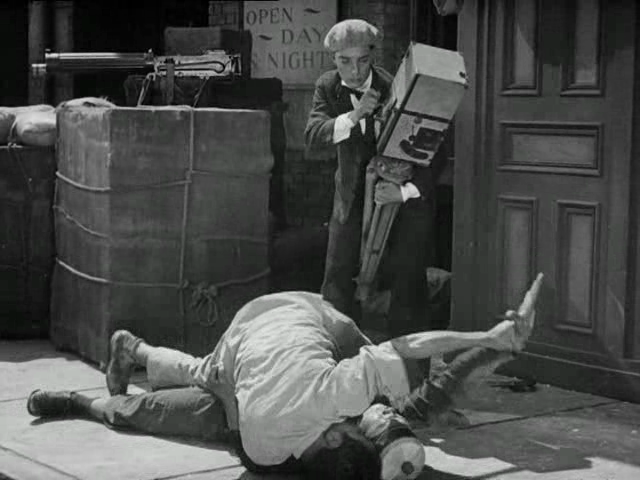
Buster_Keaton__The_Cameraman__film_1

Part of my attraction to shooting a silent black & white movie is my love for films of the 20s (particularly those of Buster Keaton, who I’ll write about another time).  I’m no scholar, but like anyone exploring a new medium, I find it helps to start at the beginning.  I’m fascinated with the process, the nuts and bolts, by which early films became such an idiosyncratic artform – while I am not interested in strict pastiche, I want to use Kithara to explore some of the constraints (static camera shots, blue-sensitive film stock, variances in speed on account of being hand-cranked) and innovations (make-up) of the time.  Filmmaking as film school.

Prom’s very stylish video has been out for a couple of months.

Nick and I collaborated again, with him writing the script and producing. Shot in four and a half hours over two nights, the pace was a return to our running-and-gunning Heartbroken Assassin days.

HALF IN SHADOW 003

With seven performers(!) and two camera operators(!), it was the largest production I have been involved in. Alongside the band, we had the fearless Davey Fuzzsucker and Eloise Menzies playing our beleaguered couple (thanks so much guys!). We brought on board theatre director Cameron Thomas to help corral the talent – he was instrumental in keeping the energy up and making sure people had something to do in each frame. This was also my first time with a second camera op – You Are Here acolyte Shane Parsons – who came up with several great ideas I am happy to take credit for. He’s more experienced than I, and it meant we got scores of material very quickly.

HALF IN SHADOW 004

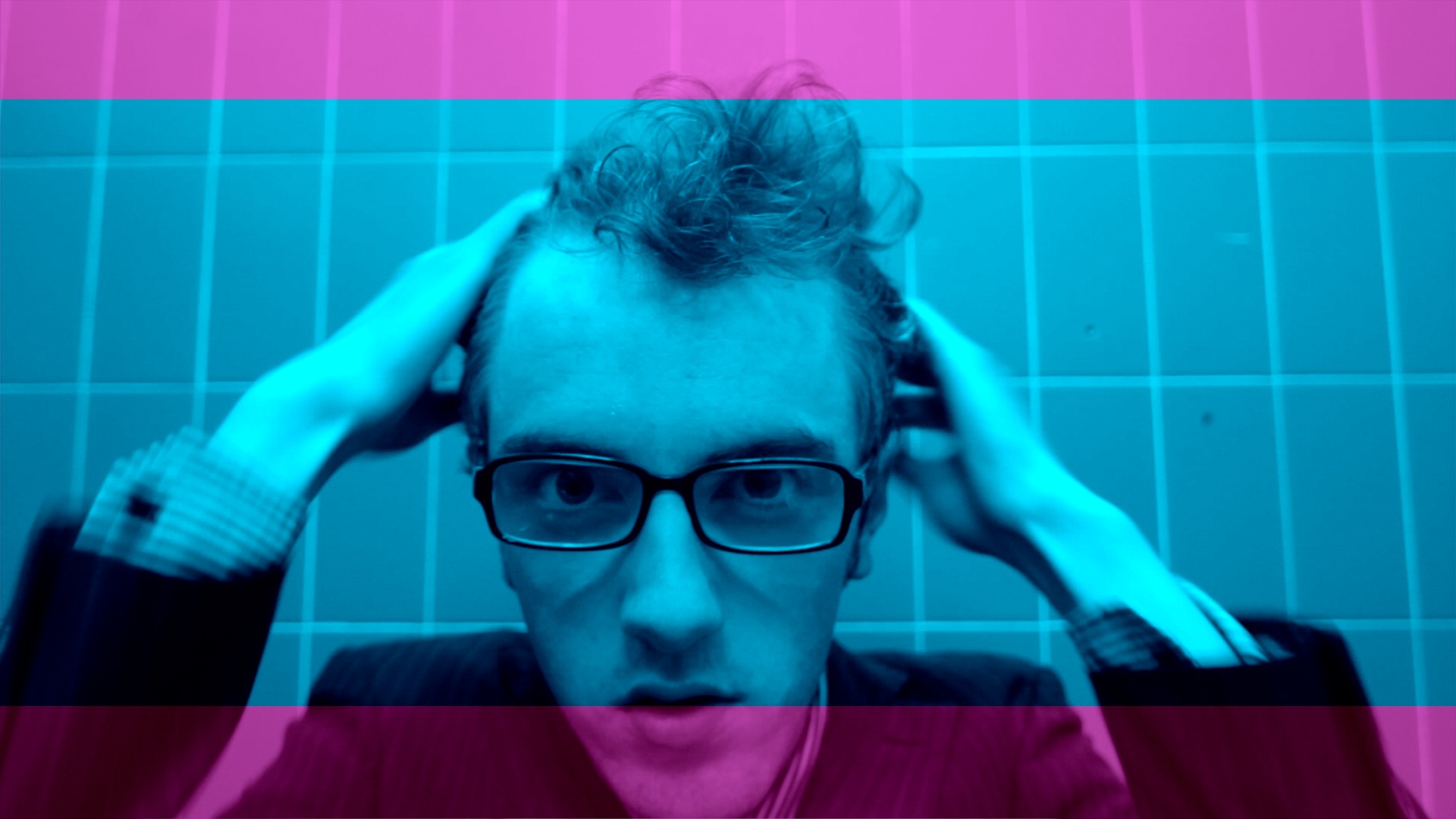
The blue light in the Street Theatre’s hallway was an unexpected bonus – I slowed down the shot to evoke the chase at the start of Chungking Express (but stopped short of undercranked “step printing”).

HALF IN SHADOW 001Because if there is a choice where you can pretend to be Wong Kar Wai and Christopher Doyle, that’s the right choice.

HALF IN SHADOW 008

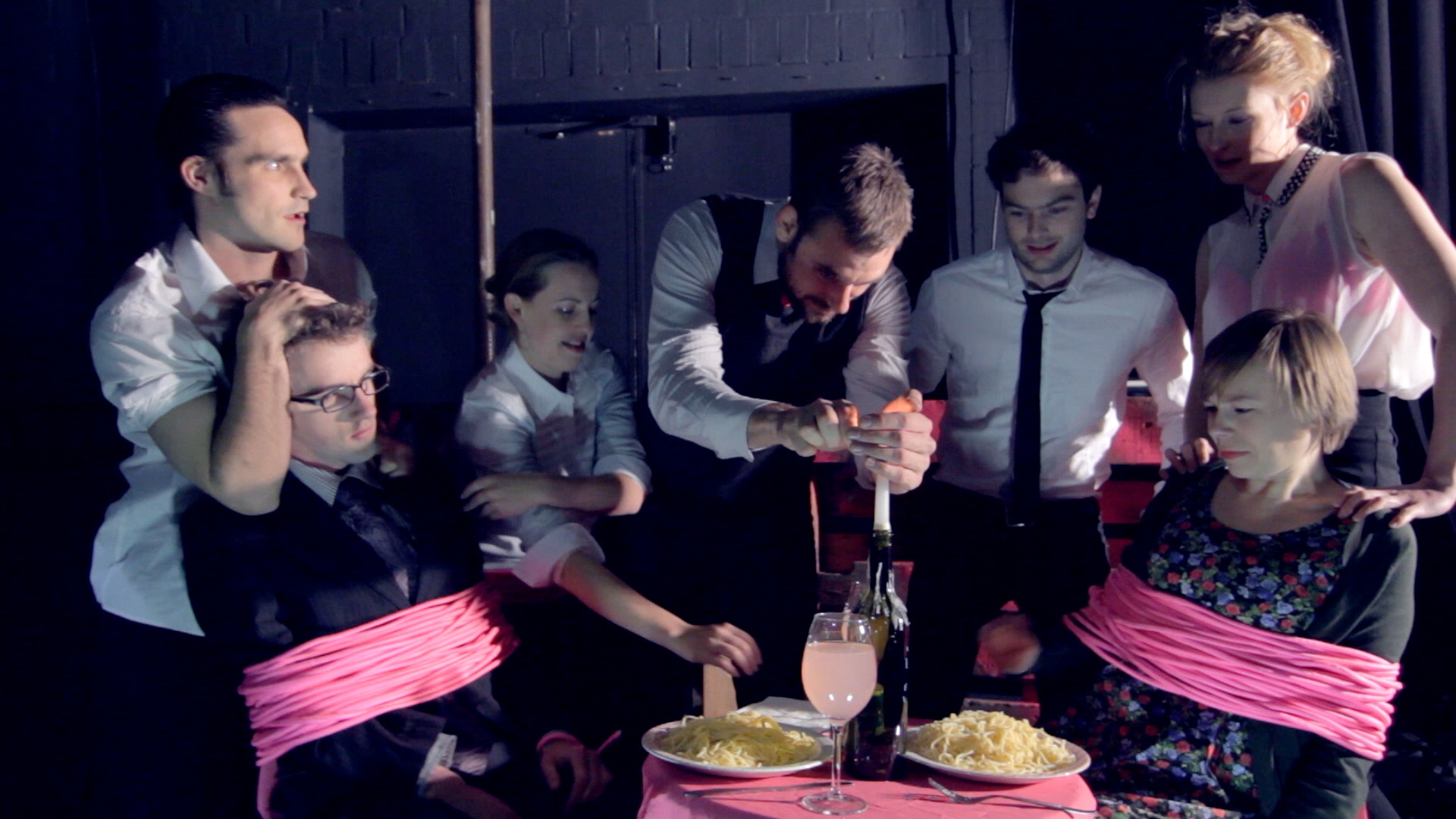
When I showed Nick the first edit, he said the dinner scene felt like an eternity. This was great news to me – the victims were tied to the chairs and being fed something they didn’t want; if the audience felt the same, I’d done my job (we did add extra band performance shots to keep it from being overbearing). The dinner scene (and in particular Shane’s sterling close ups) evoke Terry Gilliam for me.

HALF IN SHADOW 007

I’d bargained on the height of the Street Theatre allowing some great bird’s eye shots, of which we took copious advantage – in particular, it sold the bed scene.

HALF IN SHADOW 005

Nick and I attended the short:seasons festival tonight, which included the world premiere of Lights. ARC cinema is the preeminent film venue in Australia – I had been taken in by a lot of ‘chat’ on the internet regarding the comparative quality of DSLR footage when blown up, but our footage looked amazing. I was also concerned with the quality of our audio – again, I found the cinema more forgiving than I had been led to believe.

Lights - DAY 02 - Cara

Lights was really well received, and it was thrilling to hear a crowd laughing in its lighter moments. I’m still blown away by seeing a film of mine on “the big screen” (as my Mum calls it), in front of a near capacity audience.

Lights

There were a couple of discrepancies in the programme which I need to highlight – in particular, the programme stated “Nick Delatovic and Luke McGrath have been on the fringes of the film community for many years”. This is false – I haven’t even been back in Canberra that long, and I didn’t pick up a video camera until June of last year – that’s 11 months at most, not “many years”.

Lights - DAY 02 - blog 2(1)

It downplays the achievements we have made – in less than a year, our debut short film has been funded by ScreenACT and screened at the National Film & Sound Archive, I have edited and live-scored a 1920s film that also separately played to a full house at the National Film & Sound Archive, completed a ten part webseries for the You Are Here festival, shot 15 videos (here and overseas) for a cooking show, and filmed 11 bands for 2XX’s Local’N’Live channel. All without any training or guidance – we’re learning quickly, and for it to be stated we’ve spent “many years” on the “fringes of the film community” is straight-up wrong.  They also credited Nick as the director – again, wrong and easily correctable.

Lights - DAY 02 - blog 2

Aside from those frustrations, it was a great evening. The other films were by and large fantastic – I’d have to single out The Book Of Memories for its amazing cinematography, and New Friend for its simple but clever storytelling.

Lights - DAY 02 - blog 2(3)Finally, a shout-out to Ben Drysdale’s impressive characterisation – the script called for Vic to do a “too-loud laugh”.  WIth only that to go on, Ben truly made it his own, and provided not only an audience highlight but an anchor for the character.

Lights will be screened at the National Film & Sound Archive today, as part of the ScreenACT short:seasons festival.

Lights still

Originally I wanted to film Lights in a series of direct, static shots, in emulation of Ozu, who’s Tokyo Story I saw and loved recently.  Nothing clever, tricky or extraneous.  After five minutes on set, that already felt constricting, and I was back to framing shots through mirrors or from extreme angles.  What’s more, after my first cut, the producer (Nick) requested more shots establishing character and setting, to “open it up”.  He was right.

Lights still

Mamet reckons all establishing shots are unnecessary and insulting to an audience, but that’s too harsh and restrictive.   Done right, they can be artistic and satisfying on their own.  Once something is established though, it’s insulting to establish it over and over.  Or just silly – Alias used to sub in the same exact shots of building exteriors in each episode.  Watching the show week to week, you might have brushed over it – watching several in a row on DVD, it becomes comical (do as Lou and I did, and turn it into a drinking game).

Lights - DAY 02 - Ben Lane

I wanted something different between scenes – fading to black felt like a wasted opportunity.  Fading to a colour was something that stuck with me from watching the right-up-my-alley Submarine (and I think I read that Ayodade took it from Rohmer).  I wanted to go one better than Submarine though, where the colours seem arbitrary, and to tie them to our theme.  Lights takes place over the months of autumn – as the scenes progress, the coloured fades change from a mustard yellow to maroon to corduroy brown, in concert with the leaves of the season.  It’s not a huge detail, but I like the thematic unity it gives.

Lights stillI want to thank everyone involved – our actors Ben Drysdale, Cara Irvine and Julia Johnson, our walk-on cameo/scene dressing car provider/technical expert Ben Lane, sound recorder Paul Heslin, and production assistants Karell Duchesne and Louise McGrath.  Nick and I are gradually building up a steady, reliable crew, and it’s the most rewarding aspect of putting in as much time as we are.

20130523-144306.jpg
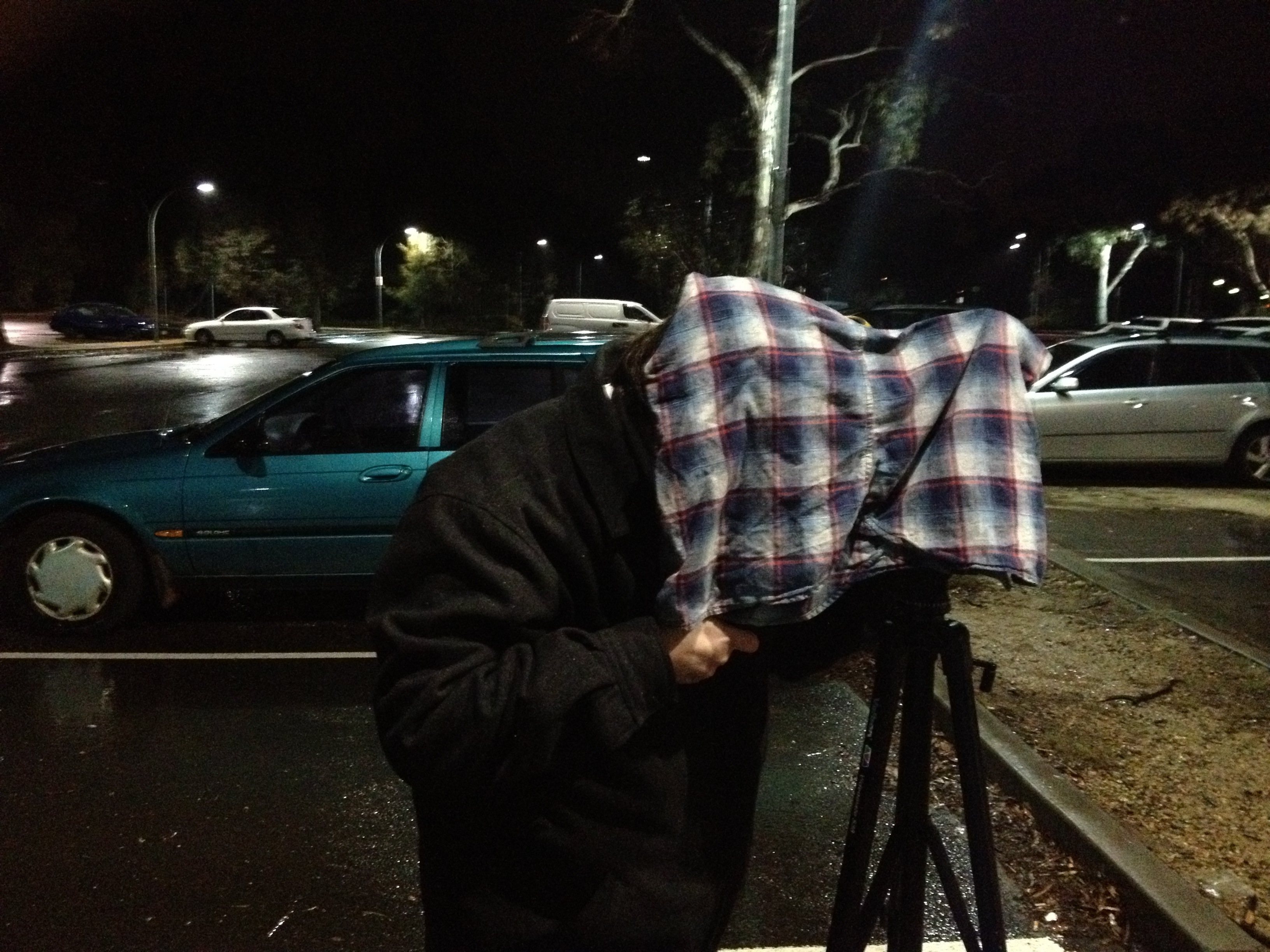
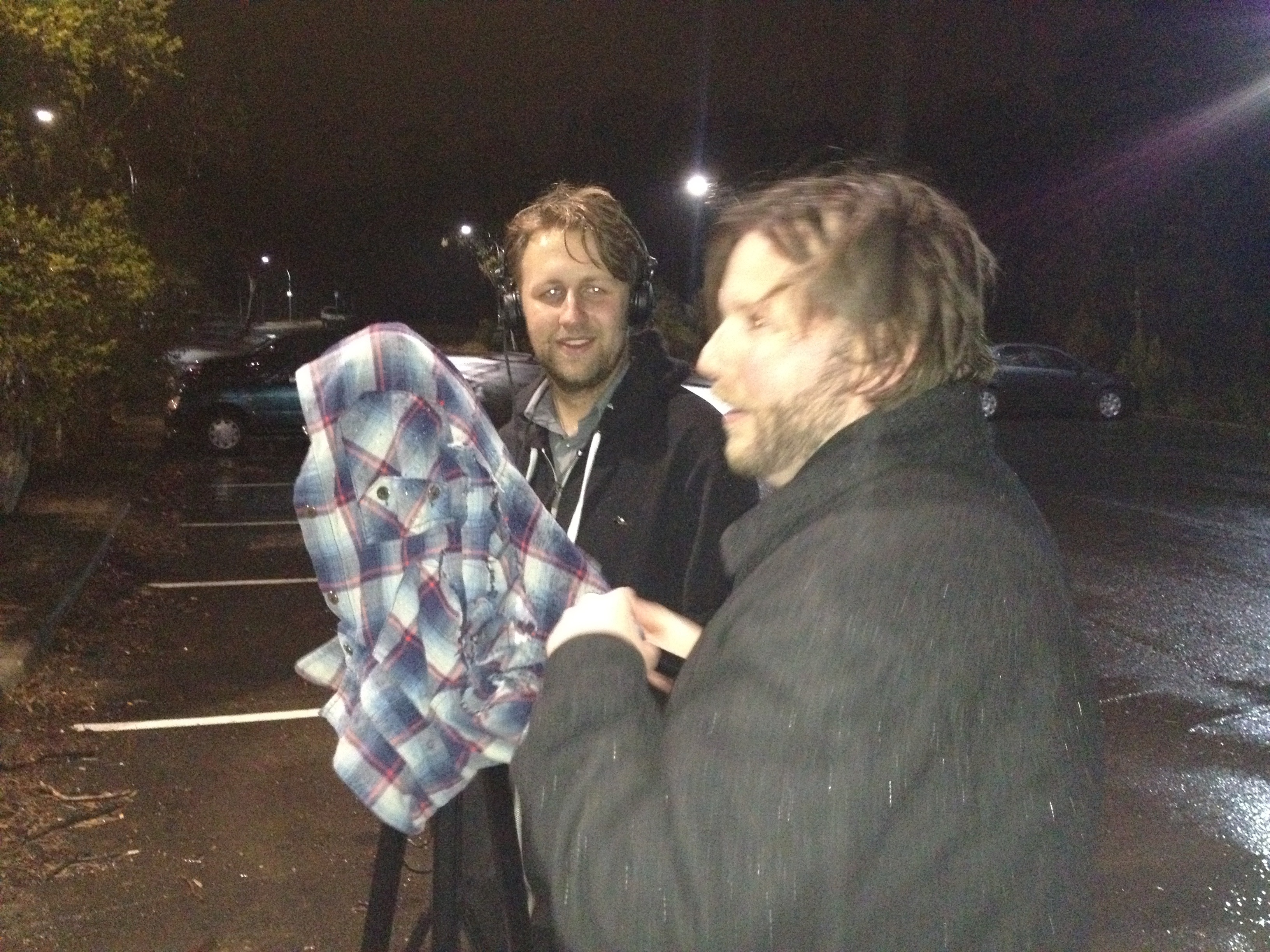
Presented for your edification, intrepid director Luke McGrath proves that wet weather is no impediment to outdoor shooting when one has the proper equipment.

So I won the ScreenACT Short Seasons competition. It’s the first time I’ve won a competition with a creative work and I’m embarrassed to say that it was a very exciting feeling. I feel like it was probably a triumph of reading the brief- my script is simple (both narratively and logistically) and engages earnestly with the theme of ‘Autumn in Canberra’.

I think the film will be a good showcase for Luke’s developing methods as a film maker. Hopefully the characters will resonate and be recognisable to other Canberrans. As a producer, I had to step up some of my skills a little, particularly location scouting. Quite frankly, the fact that I wasn’t acting in this one made my on-set experience a relative breeze. I tried to provide a writers perspective when I thought it would be helpful, but on the whole I was happy to stay out of Luke’s way.

20130523-145323.jpg
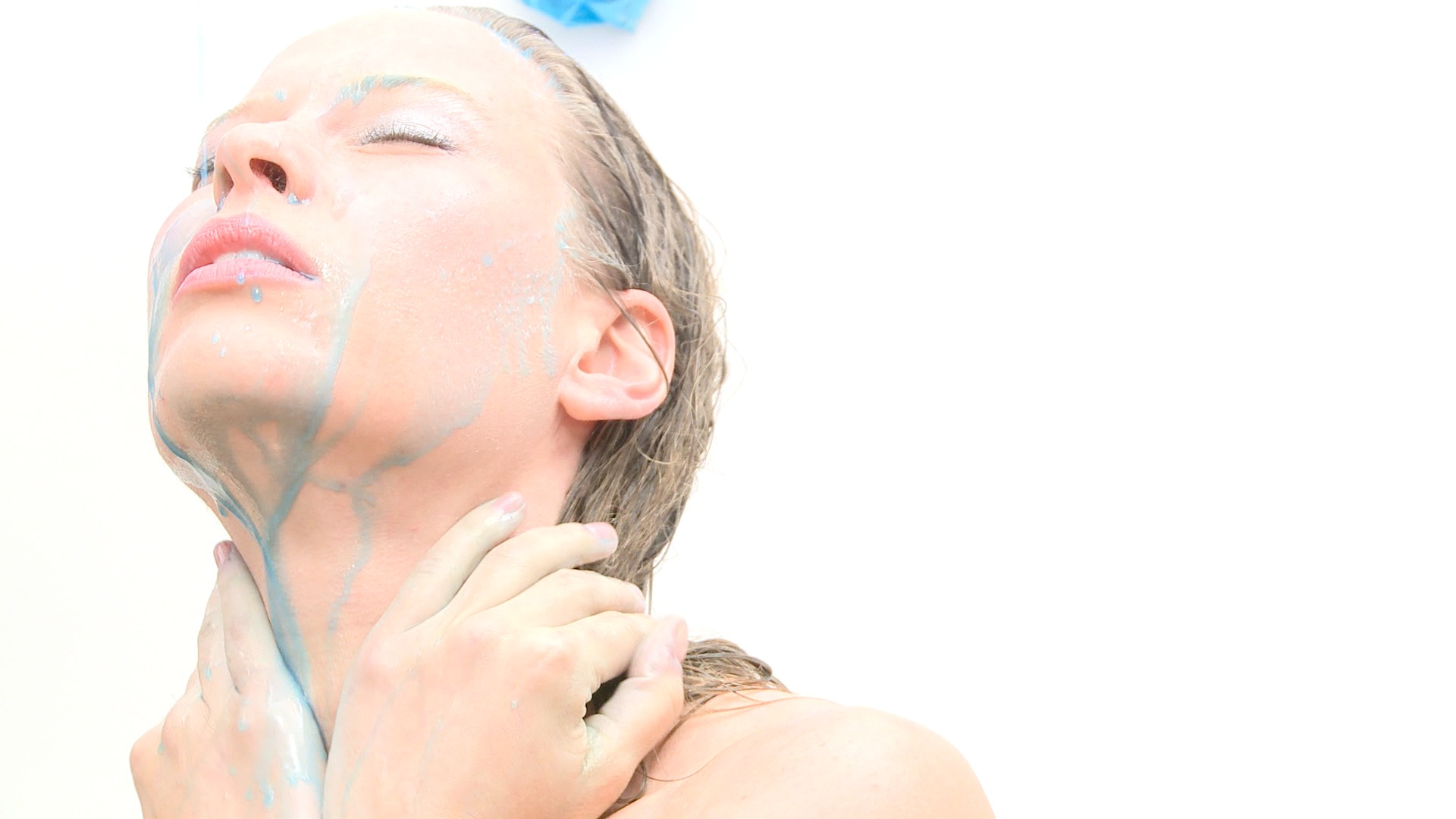
Much more difficult was the Cracked Actor music video shoot, that with one thing or another we were forced to cram into two days in the middle of our larger shooting schedule. The video is for our forthcoming single Lemon On Your Lover, and my ambition was to create a three-minute, micro-budget, science fiction love scene.

It wouldn’t have been possible without the imagination and skill set of our production designer Julia Johnson, and the stunning performances of Marc Robertson and Ali MacGregor as the lovers in question. I ended up filling various roles on set, including Plastimake-Baker, Food-Dyer and Disposer-Of-Tongues.

Luke will be hooking into the edit after he hands in Lights, but the view from the viewfinder is very promising. I’m quite excited that we’ll have two pieces coming out that are so different from each other.

20130523-150252.jpg
Shooting over the month of May created an interesting parallel with the story of Lights, in which the encroaching Winter becomes the organising principle in the characters lives. Suffice to say that I’ll be writing the next couple of projects for an indoor location!

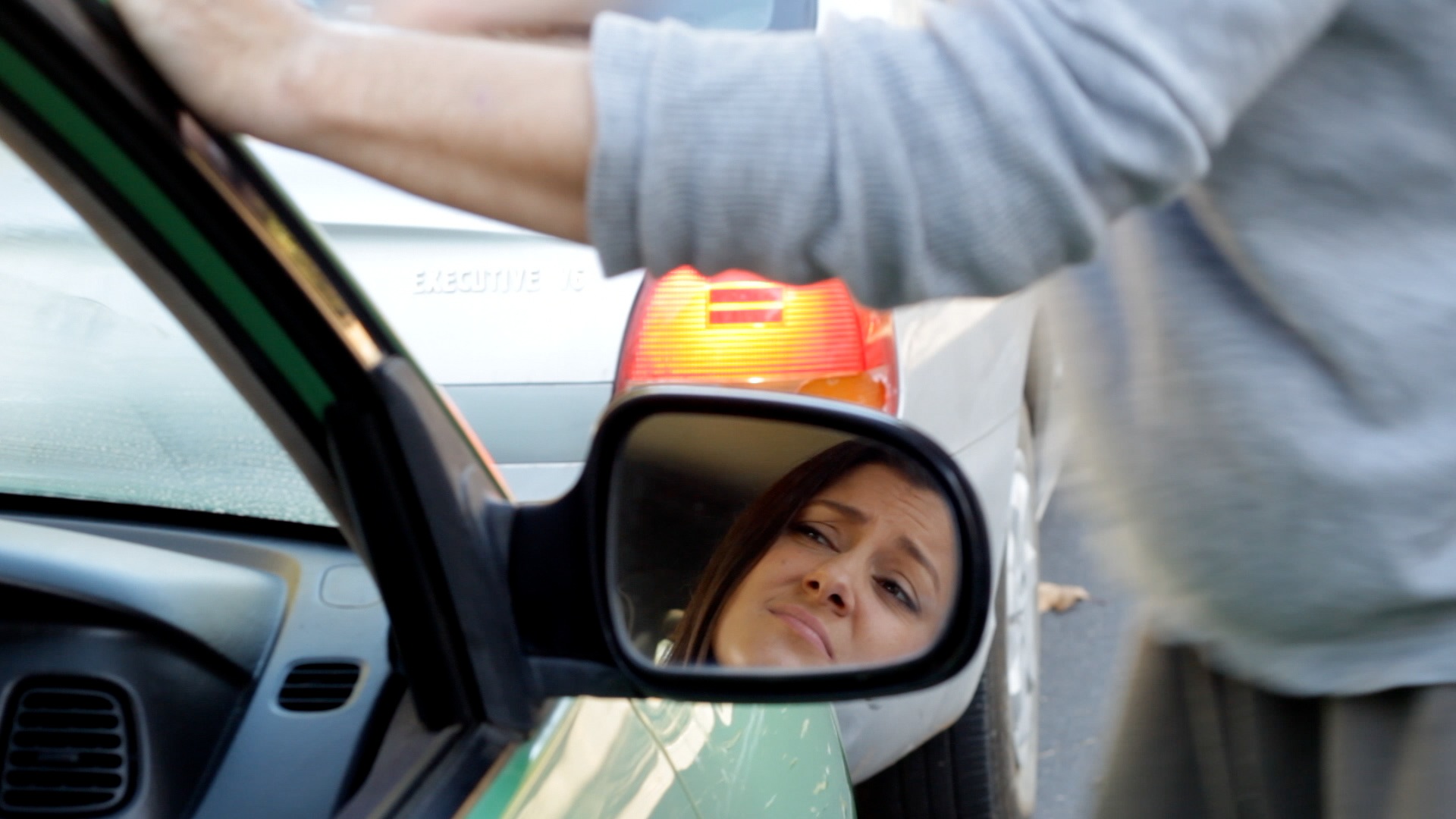
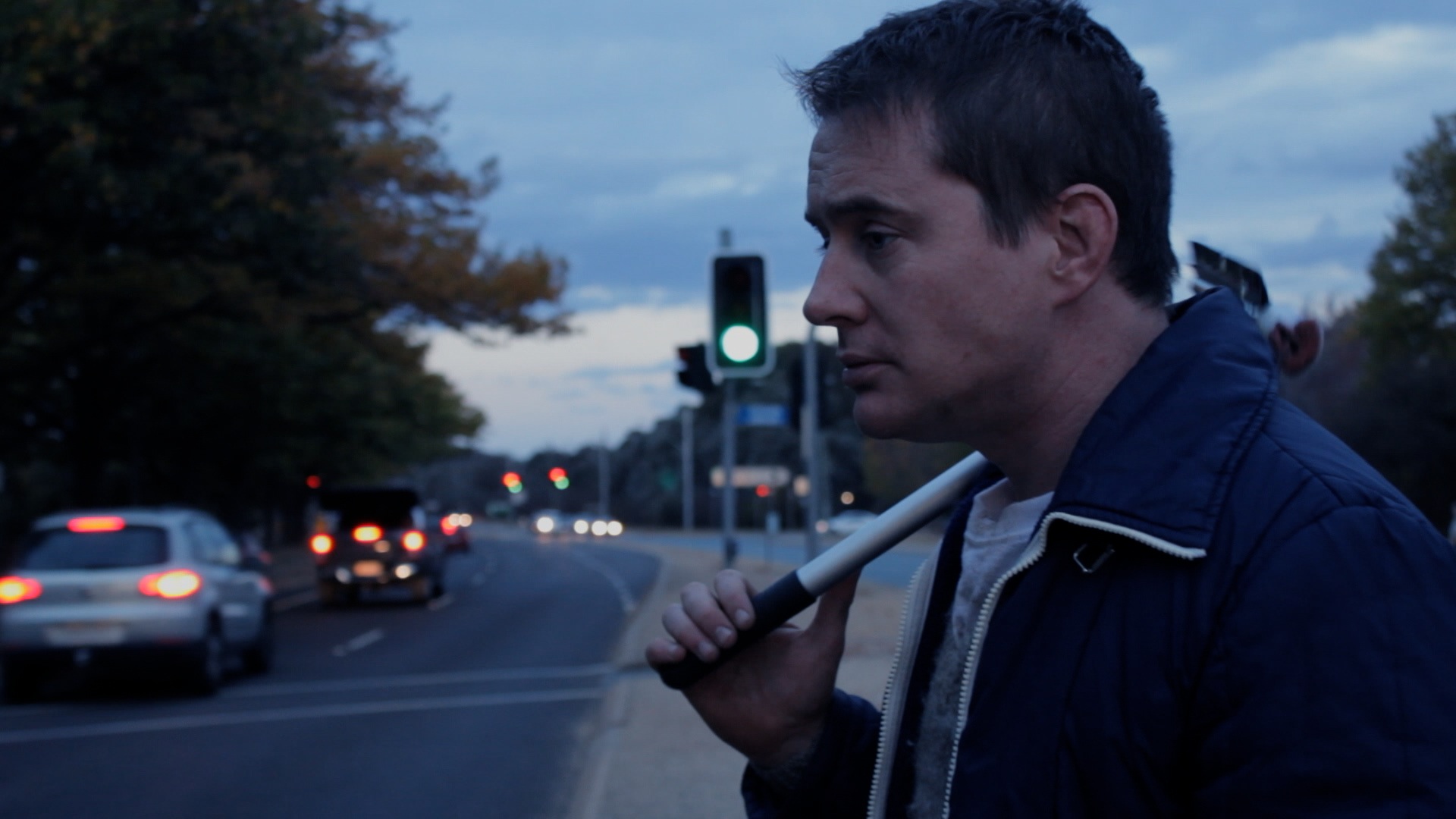
Nick’s screenplay Lights recently won the short:seasons competition.  The competition called for short film scripts themed around Canberra and autumn.  The winner is given a month to shoot the film so it can be screened at the NFSA as part of the inaugural short:seasons film festival.  We filmed the bulk of Lights over the weekend.

Lights Test Footage - Nick and Luke

Our intention was to use the project to trial new equipment and gather experience on aspects of filmmaking we hadn’t encountered yet (such as running a casting call and auditions).  Sound recording (the weakest aspect of Heartbroken Assassin) was one area I wanted to improve – to that end, we recorded the actors using wireless lavalier mics into a digital recorder (manned by sound artist Paul Heslin).  This significantly upped our production values, and gives me greater control when mixing in post-production.  I’ve already tested how compression and EQ’ing can enhance and augment the raw recordings and I’m loving the difference.

While we had some access to additional film equipment via ScreenACT, we chose to film with my DSLR (if it’s good enough for Ed Burns…).  I was underwhelmed with the test footage we shot with a Sony EX1r – my DSLR appeared to outperform it in the dusk/night shots that comprise a large portion of the film.  While a dedicated video camera has a lot to recommend it, I think that at our level, they are of greater benefit to documentarians than narrative filmmakers – autofocus, zoom, balanced mic inputs (we recorded sound separately), and stabilisation (we mostly use a tripod) are all redundant or inessential.  My one concern is that DSLR footage, once blown-up to appear on a cinema screen, will be grainier and less detailed than if it was shot on the EX1r.  That’s something we’ll have to discover on the night – if it turns out to be the case, it will be unfortunate, but a good lesson to have learned on this project.  My motto, after Samuel Beckett, is to fail a little bit better each time.      

The time constraints meant we were unable to do a casting call and run auditions (something we’ll do for The Real).  As a development opportunity, this was a shame – as it pertains to Lights specifically, it didn’t affect the film.  In fact, we lucked out with the actors – Nick knew our lead Cara Irvine through a couple of confluences (Broken Hill, housemates) and we sat down and discussed our intentions with her early.  Ben Drysdale and Julia Johnson, both actor friends we’ve known for years, joined shortly afterwards. 

Lights - trailer

Working with actors is something I’ve been thinking a lot about recently.  Prior to this year, my experience was dated – assessment pieces (as a director) and productions (as an actor) while obtaining my Bachelor of Arts in Theatre Studies.  Returning to it, I’m still trying to discover what works best.  I admire directors like Wong Kar-Wai and Mike Leigh, who begin a project with only actors and ideas, and then build the story together.  This approach requires more lead time than I have had for anything to date, nor do I believe it is suited to every project, but it’s certainly appealing.  I like to give actors a lot of freedom, for a couple of reasons.  Being Director doesn’t mean I magically have all the best ideas – making films is a collaboration, and actors will have thought about the character and the role in different ways to myself.  Before imposing my views, I want to see what they’ll bring to it – being overbearing doesn’t produce better work. Secondly, I’m still building a vocabulary to engage with actors – at the moment, when something’s not working, I find it hard to articulate it in a way that makes the next take better (and sometimes I think I’ve made it worse).  It’s a bit like the chestnut about art – I don’t know what it is, but I know what I like.

I don’t know how to coax a good performance from a bad actor (and by “bad” actor, I don’t mean those that make choices that would be different to mine or what I feel the scene is about, but those that no matter their choice are still too far on either end of the spectrum – too stilted or too hammy).  The main issue, as above, is time.  It’s too late once you are on set – the work needs to be done earlier – either in casting, or in rehearsals.  I’m sure there are directors that can (and have) worked miracles, but I find I can only influence performance by a few degrees.  Experience and exposure will help in this regard, but the better solution is just to work with good actors. 

Most actors I’ve encountered are serious about their craft and are brilliant collaborators.  I then have the reverse problem – I fall for everything they do.  They make dialogue I think will be a tough sell sound completely convincing.  I want to keep every inflection of every line reading.  This was the case with the actors on Lights – rather than settling on a delivery, I was amazed how often they were reacting in the moment, and how nuanced each exchange could be – the pitfall then is wanting to do take after take, not because we haven’t got a workable one, but because I want to see what else is possible.  When working with good actors, I try to get out of the way, and allow them to find the scene.  My direction is limited to blocking and pacing – I read recently that Damon Lindelof said directing is mostly about telling actors “faster, faster!”, and I found myself doing this a couple of times over the weekend. 

There are no hard and fast rules for any of this, and everyone has their own way they like to work (like penguins, when directors and actors find their styles compatible, they often partner for life, or at least several films)  – what I want to do is skill up to be able to deal with the widest range of acting styles and temperaments.    

By increments, our shoots are getting more elaborate.  On Heartbroken Assassin, I could operate and keep track of everything myself.  Going forward, with a view to increased production values, this is not possible.  It’s not even a case of having enough hands, it’s not having enough headspace.  It becomes hard to give appropriate and equal consideration to every aspect – when you’re focusing on the framing and panning, you’re not evaluating the acting.  When you focus on the acting, you’re not critically considering the lighting.  You concentrate on the lighting, and you drop the ball on continuity.  And so on.  Nicholas Winding Refn recently said a director has to be a jack of trades, that he/she needs to know a little – but not everything – about all aspects of film-making, from cinematography, to sound, working with actors, pitching to producers, budgets, writing, editing, and everything in between.  There are areas I am more confident with than others, but there is so much to learn and put into practice.  It also means finding the right collaborators to share the load. 

I’m still not sure what kind of director I want to be, but it’s taking shape without my realising it.  Winding Refn said in the same interview he films his movies in chronological order – that sounds absurdly extravagant to me.   However, during a table read Nick made it known to our actors that when filming any camera angle, I like to run the entire scene, even if only a small percentage of that angle will make it onscreen.  I hadn’t realised I was doing this, or rather, I hadn’t realised this might set me apart in any way.  I have my reasons for working like this – the two largest being I think it helps the actors be as natural as possible each time, and that it provides me with the most options when editing (being my own editor is perhaps the greatest influence on my directorial style so far).  I’d love to say it was a throwback to my theatre days or in emulation of Ozu or something, but I’d be lying.  I think your style evolves between what you consciously do, and what subconsciously feels right.

Apologies for rambling – more of a ‘process’ post than usual – I’ll have more to say about the actual film once we have a first cut. 
You Are Here is the most fun I’ve ever had.

You Are Here is the best team I’ve ever worked with.

You Are Here is the least sleep I ever get.

You Are Here is the most successful thing I’ve ever been a part of.

Canberra has spoken. They like the festival. They want the festival. Every other terrifying aspect of administration and funding and risk management strategies and insurance can now be worked out on that basis.

Please enjoy the above video, which only skirts the surface of our 11-day, 120-event Artsplosion. Also be enjoying this bonus video of one of my personal Babies, Mixtape From Canberra. All credit to our You Are Here Media Team and the Artists who made it all happen.

http://vimeo.com/m/62305983

After writing a few episodes for my cousin/writing partner Jason McGrath’s show Crooks, I decided to strike out on my own.

The Real

The Real is a sitcom set in a suburban real estate agency.  It’s been likened to Parks And Recreation, and that gives you a good idea of its format and tone.

I’ve written two full episodes, a season outline, and a synopsis. But with no contacts in the industry, that’s as far as it’s gone.  Through Jason, it’s passed under the eyes of a couple of producers, who were interested but have remained non-committal.  I attended SPAA Fringe last year, but mainly met other writers and directors (which, to be honest, was mega-fun).  Everyone had a pitch or a story and was looking to take the next step.  Most were a few steps ahead of me, having either produced short films and/or worked on features.  It was a good introduction to what little industry Australia has, but I didn’t come away certain what to do next.

If there was a take-home message, it was if you want to get something out there, make it yourself.  After Heartbroken Assassin, we now have the confidence to do exactly that.

Nick and I are shooting the pilot episode as a ‘proof of concept’.  Which is to say, I don’t yet know whether it will be the final iteration, or solely used as a tool (like a script) to get meetings with production companies and networks.  Either way, having it shot will both demonstrate the show’s viability, and also our abilities as a writing/directing/production team.

Australia’s track record with sitcoms is not great, but with funny, clever shows like Please Like Me on the air, I feel we’re turning a corner.  I’d love to see The Real be a part of that.

We’re currently locking in the script, before looking to casting and locations.  Exciting times.