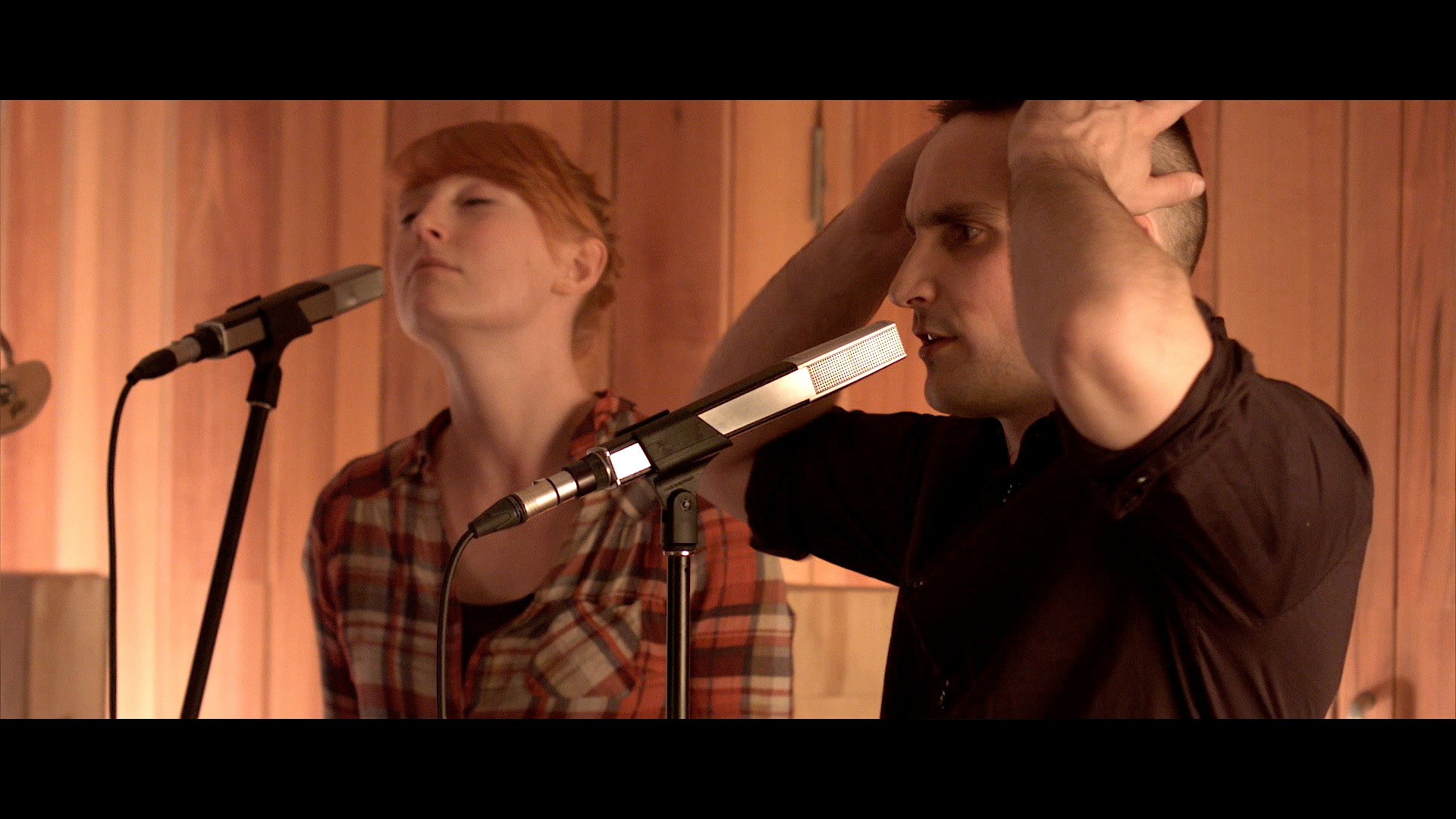
NICK- Hey Guys, we thought we’d tag-team the post for this, the third of five videos from the EPINADAY.
I originally wrote Lake George to pitch to Luke’s country band The Bluffhearts. The chorus line- ‘it sure ain’t a good idea’ – just popped into my head with the melody attached, and it was one of those good lines that brings the whole narrative with it. I remember sitting down to write it in the leafy backyard of a sharehouse in Hackett, it took about 40 minutes. I went straight out and played it at a gig that night.
It was a bit too 3/4 for the Bluffhearts but it went on to be a bit of a showstopper for Big Score, the jam band I had going with a bunch of other singer-songwriter friends. We use to play a very rocky version with me strumming dumbly on the bass and drummer Nick Peddle going apeshit out of the bridge stop. Nick also plays on this version and it’s a testament to his versatility that he nails the sparse vibe every bit as well.
Obviously it’s the sort of Place Name song were the Place has very little to do with the narrative. That was very much on purpose, as I’d wanted to use an iconic ACT location without trying to say anything about Canberra. It’s a Song-As-Short-Story about dodgy guy meeting dodgy girl, when I wrote it it was pure fiction but in the intervening years I’ve probably skirted close to some of this behavior (though I still don’t drink OR drive).
I’d say it probably still stands up as one of the five best songs I’ve ever written and I love this version. Jules nailed the sing-along hook (which was originally sung by Big Score’s Beth Monzo) but for me it was particularly cool to have her on electric guitar instead of her usual acoustic. Matt resisted my advice to play a busier part, and as always he was right. Sam’s slide licks were played on a homemade guitar that his Dad made as a young man, hopefully we can find a still shot of it to post ’cause that thing is nuts.
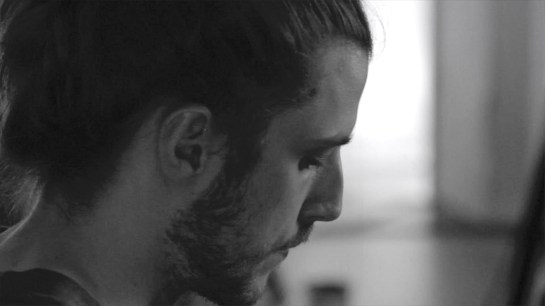
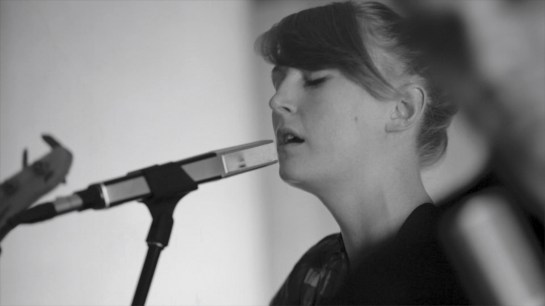
LUKE – Lake George is one of my favourite Delatovic songs (I still remember the first time I heard it years ago at a Bluffhearts practice in Mel’s garage). That beautiful, weary line towards the end – “I’ll take off my spurs/And I’ll put on the bridle” – is as perfect and unique a metaphor as it gets. I remember the version Delatovic and Peddle used to play in Big Score as obstreperous, the individual segments coming together like parts from different songs. This take is more cohesive, slower, stately – Sunday morning rather than Saturday night. I needed the edit to reflect this.
Black and white images always seem at a remove. Some people think this remove is one of time, harkening back to the pre-colour era of film. I think the remove is not in time, but in reality – the world we live in is in colour – black and white is hence otherworldly (or just other). It’s a space that belongs to imagination, to movies, and to dreams. It’s set aside from real life, and larger than life in some cases. It can make the ordinary seem artful, and make the artful seem sublime.
All of which is unimportant to the casual observer, but as a filmmaker, it’s certainly an interesting place to start. The dissolves (don’t get me started on dissolves!) enhance the floating atmosphere, and complement the unhurried, hazy pace of the arrangement.
Taking footage from the same session and making four visually distinct videos is a challenge. World Of Hurt and Lake George have set the bar high – I watched Gimme Shelter this week for inspiration – maybe I need to superimpose a long flowing pink scarf onto Nick!
I pitched the idea of ten one-minute songs to EMA label head Oscar Condon at the Wig & Pen the second time I met him. At that point, all that existed was Sno-Globe, written the week before. Sno-Globe, like its namesake, felt to me like it contained a full song/world in miniature. It prompted me to consider a whole album in microcosm, and X (at least as a concept) was born. Oscar loved the idea from the get-go (he was also the sadistic bastard that suggested I make videos for all ten as well).
The beauty of starting with a clear concept was I could just figure out what songs I would need for a rounded album, and then write them fit for purpose. I knew I’d want some kind of mid-point palate cleanser (That’s A Bingo), a song in French (Ou Est Henri?), a song with a starring turn from Mel and Cath (Unusual Curse), and a lot of crunchy rock (everything else). This was also the first tracks conceived knowing Mel and Cath were in the band, so songs like 6BB, Ou Est Henri?, Unusual Curse, and Love, Or Leave It Alone (For Iris), were written with female vocals in mind.
Three songs in particular wear their influences on their sleeves – Good Night was my homage to Cosmic Psychos, That’s A Bingo to Jon Wayne, and Kingdom Of Fear to The Blade Winner.
Cosmic Psychos are new favourites of mine, having only heard their music after watching the brilliant Blokes You Can Trust last year. Good Night is me unabashedly channelling my inner Ross Knight – the only twist I added was to cast the song in the second person, an under-utilised variant in rock’n’roll, and also a first for me.
In contrast, Jon Wayne, the sui generis drunken cow-punk band, have been on my radar for years. I first read about them in Dave Graney’s book It Was Written, Baby back in the 90s, where he extolled their praises and let loose the secret that The Cruel Sea’s Better Get A Lawyercribbed its best lines from their song Texas Jail Cell. They were very popular with me and Na in The Bluffhearts-era, and we adopted some of their catchcries and licks into our repertoire. They are also concept album savants – nearly every song on their masterpiece Texas Funeral has ‘Texas’ in the title. Written in 2010, That’s A Bingo is the only song not written/finished specifically for this album. It sees me adopting the sneering, lecherous vocal style of Jon Wayne’s singer (also pseudonymously called Jon Wayne). I perform it with a guitar pick clutched in my teeth, to replicate the tight-jawed sound of someone talking with a cigarette between their lips.
Kingdom Of Fear was literally me wanting to do my version of a The Blade Winner song – a classic rock tune filled with grand, apocalyptic imagery, similar to his Sweet Babylon.
The blindingly obvious revelation came later – hey, I know The Blade Winner! Why don’t I ask him to sing it? As you can hear, he did not disappoint (though he nearly gets overshadowed by Mel and Cath’s showstopping backing vocals).
The final song conceived for the project was Kevin Lauro’s Blues (Angry Women, Pt. 1). Kev offered to write a song months before we began recording. I quickly agreed, mainly because it saved me writing another one. However, as the recording date drew closer, I began to question this decision. Kev, on a weekly basis, would insist his song was near completion and would be ready to show us all the following week. I was even invited round to his place a couple of times to ostensibly hear it – every time, the sly fox would nonchalantly defer its unveiling to a later date. It became a running joke, some kind of elaborate ruse. With just two weeks to go, and Kev still insisting it would be finished, I figured we needed a Plan B.
I am a huge fan of Lars Von Trier’s The Five Obstructions, the film where he challenges Jorgen Leth to remake The Perfect Human five times, each time with a new set of challenging rules and criteria (The Perfect Human was the inspiration for our current series of projections). On a couple of occasions, Leth does not strictly adhere to the set rules/obstructions – Von Trier then takes it upon himself to ‘punish’ Leth with more severe rules the following time. For the final iteration, Leth’s punishment is that Von Trier will make a version of the film… but it has to be credited to Leth. I co-opted this idea as punishment for Kev – his song, which is one minute of ludic avant-jazz nonsense made up on the spot by the band, had to be credited as written by him, and it had to be called Kevin Lauro’s Blues (in homage to the similar Stooges track L.A. Meltdown Blues). Kev accepted, likely relieved that he no longer had to finish his song (though he was still working on it on the day of recording!). The ‘Angry Women’ suffix comes from Mel and Catherine’s contribution, the song’s sole lyric, intoned in both French and English.
The last thing recorded for X was Nicholas Coombe’s saxophone. I’ll take a sax solo over a guitar solo any day (as any Missing Lincolns song will attest). To me, sax mixed with electric guitar either sounds like The Stooges or The Saints, two bands I credit as influences (fun fact: the chunky chordal riff of The Missing Lincolns’ Light A Fire Under You came about trying and failing to play Know Your Product). Nick C is a delight, one of the most relaxed and up-for-anything musicians I’ve had the pleasure to play with – he’s now played on Holiday Inn and X, AND performed with us at the launch – I’m surreptitiously trying to make him a fully-fledged member of the band before he notices.
The indelible cover image is by Uy Nguyen. Uy and I met on the first day of year seven – he’s now a talented artist and architect, and when he posted his drawing of a sloth in a bowtie, I was immediately smitten. The mixture of cuteness/evilness, savagery and sophistication, seemed to parallel our sound. The irony of a sloth as mascot for the quickest album in the world was also too good to pass up. I hope to convince Uy to design the covers for our future releases too – it would be brilliant to have an artist of his calibre establish a consistent look for the band’s material.
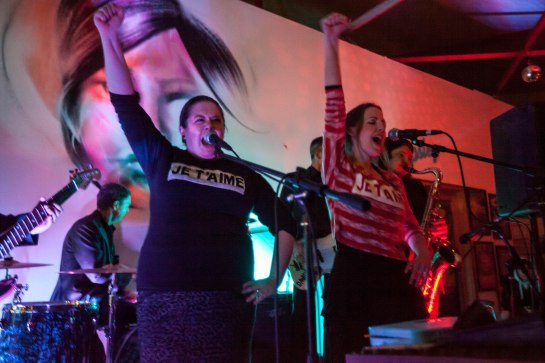
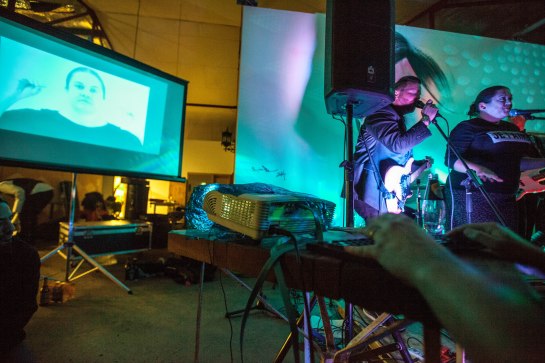
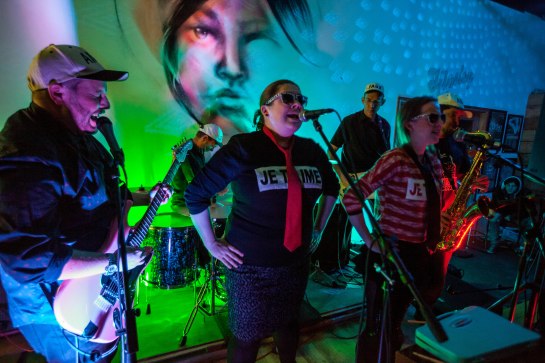
The launch last Saturday was a rollicking good time – as a label, EMA is distinguished by its lack of homogeneity – the night included sets of skeletal folk-pop, grunge, trip-hop, punk, choral electronica and drone. Around 150 people attended, and we sold a bunch of albums. Not wanting to dilute the impact of our one minute blasts, but recognising that the set would be too short otherwise, we played all the songs twice. It was Darren that came up with the idea to do it as a palindrome, playing the songs through the second time in reverse order. It added another layer of playfulness to a gig which also included a (minor) costume change, an intermission gag (thanks Nick!), and a pre-arranged stage crash by The Blade Winner.
For our projections this time, Paul Heslin live vee-jayed. We used the same black and white footage of the band (I hastily filmed new drummer Darren the week before and subbed it in), and Paul coloured our first set red, the intermission white, and the second set blue, to mirror the French flag. Paul is the unsung hero of the FFA family, having implemented our live visuals, remixed Holiday Inn, and recorded overdubs for X. He’s one of my favourite and most trusted collaborators and (friends), and I hope we do lots more together in the future.
With Nathan up on stage, our numbers swelled to seven, and we barely fit on the tiny stage. Combine that with the suit jackets and sunglasses, and I feel like we are entering our Dexys Midnight Runners/Young Soul Rebels phase. Which, excitedly, gives me a whole raft of ideas for the next thing.
I love learning about the creative process of others – I’ve absorbed all the writing rules I could find, and spent happy hours reading the interviews in The Paris Review. In the same spirit I thought I’d break down the process for one of my recent songs – Love, Or Leave It Alone (For Iris).
Everyone starts with an inkling of an idea for a song, and at some point later, has a finished product. That much, arbitrarily, all songwriters must agree on. The middle is harder to quantify – some refer to the muse striking, to telephone lines with God; for others it’s cerebral, about getting in the right headspace to forge new connections in your brain. The reason I’ve chosen Love, Or Leave It Alone (For Iris) is that, atypically for me, the route to the finished work breaks into several delineated steps.
It began with the melody. I had been tinkering on an arrangement for a punked-up version of Iris DeMent’s Let The Mystery Be. The melody that became both the vocal and glockenspiel line was the guitar solo I wrote for this abandoned cover. When the concept for ‘X’ was hatched, I went looking through my demos and re-discovered it. Using the same stock I-IV-V-I progression, I refashioned the solo segment to be the entire song. It was a new way of working for me – like sampling, starting with a base material and reworking it into something completely different. That’s why Iris is named in the title – my version of the literary ‘with apologies’ used when a work is based on another.
For me, lyric-writing starts with a strong opening line or title. Until that comes, I’m powerless – I had the chord progression for Faux Faux Amis song Don’t Grow Up Too Fast for years until I found words worthy to be paired to it. The process for this song was compounded by three factors:
1) I couldn’t wait – I only had weeks before I needed to teach it to the band,
2) the strict and windy AABCCB rhyming structure I felt the melody suggested, and
3) I knew I wanted the song to be a boy/girl co-lead vocal.
I could have capitulated on the third point, but my gut wouldn’t let me budge. Not only a boy/girl co-lead vocal, mind, it had to be a “couples bickering” song. These are, to me, the pinnacle of duets. The most famous example is almost certainly Meatloaf’s Paradise By The Dashboard Light. Other favourites are Johnny Cash and June Carter’s Long Legged Guitar Pickin’ Man and Jackson, John Prine and Iris DeMent’s In Spite Of Ourselves (Iris again!), The White Stripes and Holly Golightly’s It’s True That We Love One Another, and The Pogues and Kirsty MacColl’s Fairtytale Of New York. Most feel like they’re between couples in long-term relationships – they get me where I live. I’ve written a couple of my own over the years, including for The Bluffhearts. I knew once Mel and Catherine joined FFA that I’d want to start writing them again.
But the model for this particular song is not any of the above – it’s The Specials I Can’t Stand It. Uniquely, the duet is not call and response – it’s Terry Hall and Rhoda Dakar singing the same thing to each other at once. It’s ingenious in its mirroring of actual fights in a relationship, when people tend to echo each other (“I’m not the selfish one, you’re the selfish one!”).
I decided I would demur writing the lyrics until I was in New York City, confident its bright lights would inspire me to new heights of lyrical accomplishment. The only problem was once I got there, I was in holiday mode, and had no inclination to work on lyrics. Eventually, I forced myself up early one morning and, armed with notebook and pen, went for a walk around Brooklyn. Lots of people (including luminaries like Nick and Samuel Taylor Coleridge) attest that walking is one of the best ways to spur creativity. I’d hoped to colour the song with experiences from the trip – references to streets we’d walked down, or diners we’d visited. None of that was forthcoming. In fact, the first verse I made it through had nothing to do with my intentions for the song, and everything about just getting a handle on the rhyme structure. It’s complete fluff, and utterly cringeworthy, but I wrote it down all the same to get the juices flowing:
I call my dreams the kingdom of nonsense
It’s where all logic hides
Pterodactyls
Crystal fractals
Divide and multiply
Most of the rhymes are slanted, and the syntax is forced. Crystals were on my mind as a result of reading J.G. Ballard’s The Crystal World while in NYC, so the best that can be said is it bears the subliminal influence of my trip. ‘Kingdom of nonsense’ is a Martin Amis reference, but so obscure no one would notice.
The next attempt was slightly better – it was definitely about a relationship, and the rhymes had improved:
When you see children, you see the future
My crystal ball’s less clear
We both were kids
Know what they did
I just can’t hide my fear
There’s an honesty to the sentiment, and the suggestion of a difference of opinion (if not a full-blown argument), but it’s still clunky – the ‘crystal ball’ line especially – and it didn’t give me anywhere to go in the second verse. I still like the volte-face in “we both were kids/know what they did”, but it wasn’t enough. I’m also still missing an internal rhyme in the first line.
The last attempt that morning had enough of an engine to get me through two verses:
Lived in the desert since I remember
Waiting on climate change
It’s just red dust
From dawn to dusk
And then you came my way
It started raining first time you kissed me
We should have bought a boat
Now every swoon
Brings a monsoon
Grab anything that floats
Written down, I admit it looks bad – the perky melody helps tremendously to sell it. And while I got two reasonably coherent verses out of it, it’s goopy stuff, and I’ve completely failed to deliver on the bickering tone I wanted. “Climate change” is too technical a phrase for a dippy love song, especially when it doesn’t even help fill out a rhyme – I knew when I wrote it I would need to replace that part. I like the desert-rain-love analogy, but it’s well-worn. And, again, it has absolutely nothing to do with my time in NYC (if there was any doubt, ‘red dust’ definitively places the story in Australia).
You’ll notice I began all of these without the one thing I insisted above that I needed – a strong opening line or title. The result is they all fell flat, and in hindsight, were always going to fall flat. I was stumbling around, looking for a foothold – but I had to try, if only to get into the headspace to recognise the right line or title when it came. That night, it arrived.
Lou and I visited Skinny Dennis – a Brooklyn hipster dive bar – to watch Pete Donnelly. His performance was great, but it was a phrase painted on the wall behind him that stuck with me – LOVE IT, LEAVE IT. There was no further context, but it felt strong. I played with it against the melody and found my title.
Love, or leave it alone.
Once I had those five words, I was more relieved than when I’d penned the whole two previous verses – I knew the hard work had been done and the rest would fall into place. That one line alone unpacks into an entire argument between a couple. The remainder of the lyrics were written at home, drawing on a boozy Brooklyn night when Lou and I had an argument over nothing. We only argue after concerted drinking – too much alcohol brings out a bad combination of my pompousness and her stubborn nature. To give it balance, I wrote it from her perspective, delivering the words to myself, the drunken boor that won’t let go until he’s achieved his meaningless and pyrrhic victory.
There comes an hour when wine turns sour
Nothing good comes when you take that tone
You’re always right
So why even fight?
Love, or leave it alone
The bar is spinning but you think you’re winning
Your arguments bore to the bone
You won’t let up
I’ve had enough
Love, or leave it alone
I had the rhyme structure, the bickering tone, connections to New York, a strong hook, and it’s honest. I like the phonetic subtext of “love, or” as well – said aloud, it could be “lover, leave it alone”, several degrees sweeter than the ultimatum of the actual line.
Huzzah! Check out Faux Faux Amis’ debut video for our slow-burner Holiday Inn. CAT FROM JAPAN have called it “a misty blues, injected with hints of Velvet Underground-esque New York vogue.” As a big Velvet Underground fan I’m thrilled with the comparison.
The video was shot in an afternoon in Brooklyn. Originally, I’d wanted to do a ‘serious’ video, starring myself. Some kind of Wong Kar-Wai montage of beautifully photographed night scenes – smeary lights reflecting off car bonnets in the rain, and the like. I wanted to be Tony Leung in Happy Together, basically. As you’ll see, that is not even close to what happened, but a few traces remained. Part of the reason we jettisoned that idea was we’d already shot the similarly structured White Roses. It felt like we would be repeating ourselves, replacing Queanbeyan with New York, and Tom Woodward with me.
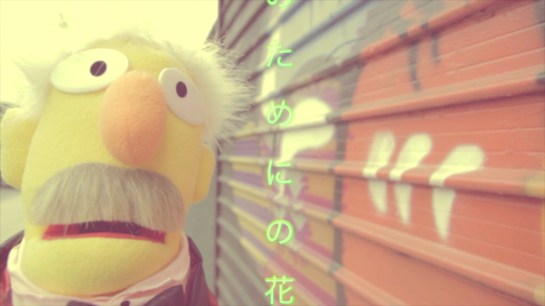
The idea took on a life of its own when we discovered ‘Stan’. Friends had clued us in pre-trip that we could create our own muppet(!) at FAO Schwarz – the resultant moustachioed progeny seemed destined for the screen. Lou proved a natural puppeteer (though as a director, I was alarmed by Stan’s limited emotional range). Stan got a great reaction out in public – people smiled and waved, and at one point, a barber came out the front of his shop offering to cut his hair.
Even now when I close my eyes and imagine my original conception for this video, the strongest image is a glowing neon sign, its letters reading from top to bottom. The kind of thing that probably hasn’t existed in New York City since the 70s.
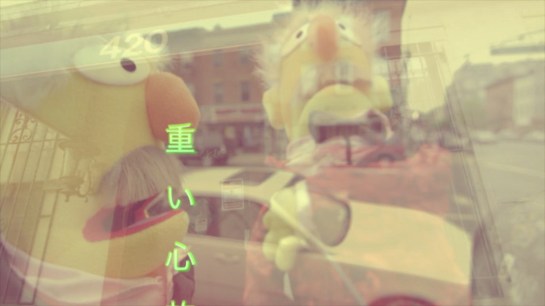
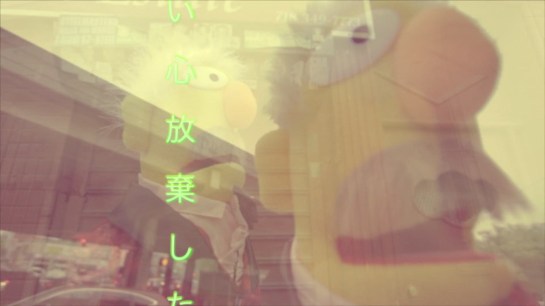
Shooting in daylight would not have captured it anyway. Still, I was intrigued with finding a way to interpolate the concept – that’s how I struck upon the scrolling, glowing text. In English, it would’ve looked like a word jumble; in Japanese, it looked natural, and its literal meaning was obfuscated enough to not distract (the individual sentences, each seven characters long, are like bad haiku lines, extraneous sentiments pertaining to the song (e.g. “with heavy heart abandon, I seek truth”). For better or worse, it’s not something I’ve seen used in a music video before.
Cross-dissolves, frequently used to show the passage of time, are on overload here, underlining the endless questing of the lyrics.
We recorded the song in Melbourne with Nick McCorriston, but the resultant version felt thin and too ‘rock’. Starting with the original stems, Paul Heslin and I remixed it, altering the arrangement and adding elements (Mel and Cath’s sultry backing vocals, Nick Combe’s killer saxophone). The result is bass-heavy and flecked with dubby touches – I think it’s now cool as fuck. Rewriting songs and/or continuing to tinker with elements post-recording is something I learnt to do in Cool Weapon. I would bring the guys a demo, and it would always bounce between us several times before the final iteration. Invisible was like that – it got built up and stripped back several times – the massive guitar solo began as the vocal line.
The first live incarnation of Holiday Inn was by my mega-talented friends Jasmine Sym and Geoff Wells, who performed it around Edinburgh after I had left. I don’t know if there is anything more satisfying for a songwriter than having others perform your song – it’s only happened a handful of times in my life – I still remember the first time, when Ben Stiel performed a song of mine at a Pot Belly open mic night.
The song prominently cribs two lines from Sugarhill Gang’s Rapper’s Delight – my influence for using another’s lyrics as a jumping off point is The Beatles’ Come Together, where John rehashed some Chuck Berry lines to kickstart his muse. In this case, it contrasts the narrator’s nocturnal search for their partner with the seeming fun and frivolity going on around him – as if the Sugarhill Gang’s party-calls are bleeding into the song as the narrator passes a nightclub blaring the tune. The rest of the song is based on an actual night in Cairns where I did wake up in the back of my car in the centre of town, and stumbled out in search of Lou. Though my ensemble wasn’t nearly as dapper as Stan’s…
Behold, the video for Slow Turismo’s scarily good Breathe. Again I wrote, directed and edited (Lou and I produced).
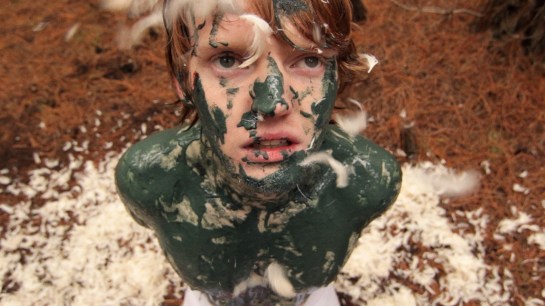
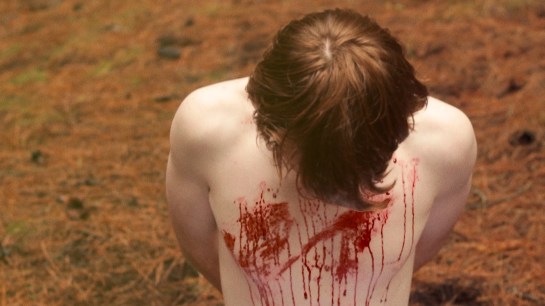
My initial pitch was to tar and feather the band, ending with them playing the song. However, they were adamant they didn’t want to appear in the clip, no matter the idea. When they arrived on set, and saw what we subjected Brendan to, they were pretty happy with their decision. I’d still love to feature them in a clip though – maybe next time.
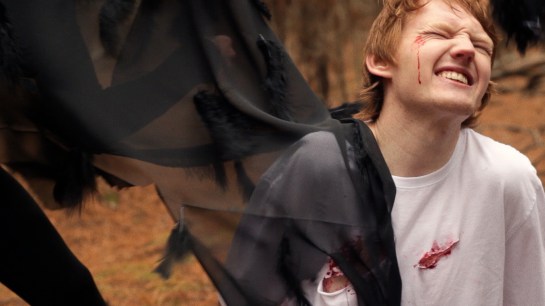
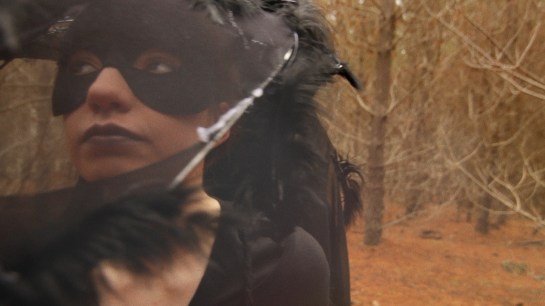
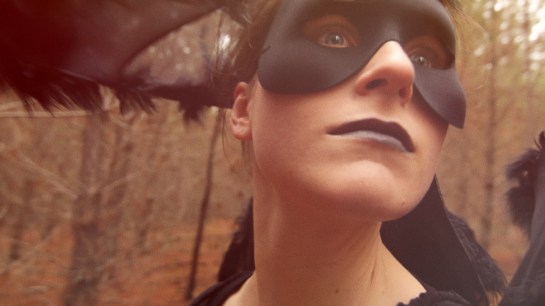
This marks the third part of my psychosexual trilogy, beginning with Cracked Actor’s Lemon On Your Lover, and continuing into PROM’s Half In Shadow, Half In Light (for a couple of happy-go-lucky guys, Nick and I have some odd predilections). The dancers are dressed in highly stylized crow costumes (again, ably provided by Julia Johnson). They could probably also find work as cat burglars, Irma Vep-style. For me, the idea of a couple of birds attempting to turn someone else into a bird had a perverse appeal. There’s also the subtext of two women torturing a man – a hazing essentially, where he’s tied up, stripped, beaten, and rubbed down, in order to conform to the cult. There’s no explanation provided, for either the literal action or the symbolism – we begin in media res – a conscious decision to stimulate questions from the audience, and allow them to fill in the gaps.
I love trying something new every time I shoot – in this case, it was a remote location, and working with dancers.
The remote location is actually only ten minutes from my house – a section of Kowen Forest accessible by Sutton Road. Still, with no onsite power or facilities, Lou and I had to be thorough in bringing along every conceivable thing we would need (it took two cars). A few weeks prior, I spent a really fun morning scouting locations. I took my camera and stopped at half a dozen places, looking for somewhere suitably ominous… that was also accessible. The highlight, beyond discovering the perfect spot, was finding an unidentified animal skull (we used it in a sequence that didn’t make the final cut). Our location, as you can see, was gorgeous – I loved the ghostly grey of the spindly trees, and the dense covering of orange pine needles. The earthy tones contrasted perfectly with the blacks and whites I had in mind for the costumes.
The two dancers/avian spectres are Jessica Pearce and Alison Plevey. I met Alison through You Are Here – we both competed in the Artist Olympics. I was bowled-over by her (as many were) in the solo tour-de-force Johnny Castellano Is Mine. From then on, I was looking for an opportunity to work together (I pitched the band four ideas for the video, two of which I wrote with Alison in mind). Alison choreographed the performance and enlisted Jessica to join her – they played the role to perfection, alternating between mischievous and sensual, otherworldly and vicious.
Our beleaguered protagonist, Brendan Kelly, is one of the leads from my sitcom pilot The Real. He’s such a relaxed presence on film, and I knew he could easily portray the vulnerability required. My only worry was that the role is confronting – not every actor is happy to re-enact archaic forms of punishment on screen. However, after reading the concept document, he accepted without hesitation – I met with him a few weeks beforehand to make doubly clear we were going to strip him and cover him in “tar” – dude didn’t even blink. I’ve seen the video at least a hundred times, but watching it again just then, I’m still blown away by his performance.
This was one of the most stressful shoots we’ve yet to pull together. I kept an eye on the forecast for the weeks before the date, but the night beforehand, I had to concede to Mother Nature and cancel the shoot – the Bureau Of Meteorology was predicting a 90% chance of a thunderstorm. Lou and I ended up taking a day off work the following week to film – our only chance to capture it before we would have had to re-cast or abandon the concept (the band were tied into a promotional schedule which afforded little wriggle room). It was only through the generous flexibility of our performers that we were able to proceed. On the day, it didn’t rain… but it was bitterly, bitterly cold. We tried our best to keep the cast warm with hot water bottles, blankets, and thermos’ of coffee, but there was no avoiding the chilly conditions. Again, to their credit, our tenacious talent never once complained. I remain incredibly impressed with all of them.
Another ‘first’ was adding an overlay of film grain to the footage. This gave it a smoother, cinematic feel – more Evil Dead than The Blair Witch Project (I don’t know if there’s a way to film in a forest and not automatically tap into some horror tropes). My dad had built a DSLR stabilizing rig out of PVC piping when I first got my camera; this was the first time I’ve made extensive use of it (thanks Dad, and umm, sorry it took so long). I used it to get all of the voyeuristic shots, peeking around trees and through branches. Horror is not a genre I’m particularly familiar with – my naiveté probably made it easier to just hook in.
As popular culture becomes increasingly fractured, the audiences for arthouse and mainstream cinema less frequently mix. The exception remains music videos – while many people aren’t interested in arthouse cinema, they’re happy to sit through something completely fantastical and outré if a song plays underneath (or if Scarlet Johnansson is in it). As an artform, music videos often obey the rules of music more than video, in that mood and texture can be more important than structure or narrative. In the same way you can’t ‘explain’ a saxophone solo, music videos are allowed to follow their own logic, so long as the spell is not broken. I don’t have much interest in the short film format, but I could happily make music videos forever.
The second of five EPinaday vids is up, and instead of a song this one is a short interview piece, also captured on that one day, that explains the whole enterprise.
The song featured is World Of Hurt, which you’ve already seen performed in it’s entirety as the first video. This is a song that I’ve been playing with PROM since that band’s first gig, so Julia was already well-versed with it. That said, it was completely re-jigged over the course of the day, changing both key and genre and morphing from a chord-based chugger into a latticework of nimble riffs.
I wrote the song in the wake of a particularly intense one-night-stand experience a few years back, one where the friendship was protected by me pretending that I hadn’t fallen hard for the other person. I wrote the song as a ‘what- if’ story, what kind of disaster might have happened if I’d let the person know how I was feeling. As is my want, I leaned hard on the melodrama and the apocalyptic imagery.
I’d always thought of it as my Springsteen song (or at worst my Hold Steady song) but the version we’ve recorded reminds me more of one of my favourite bands, Memphis-based post-soulsters Reigning Sound. The live-in-studio approach really seems to have been a perfect approach for this track.
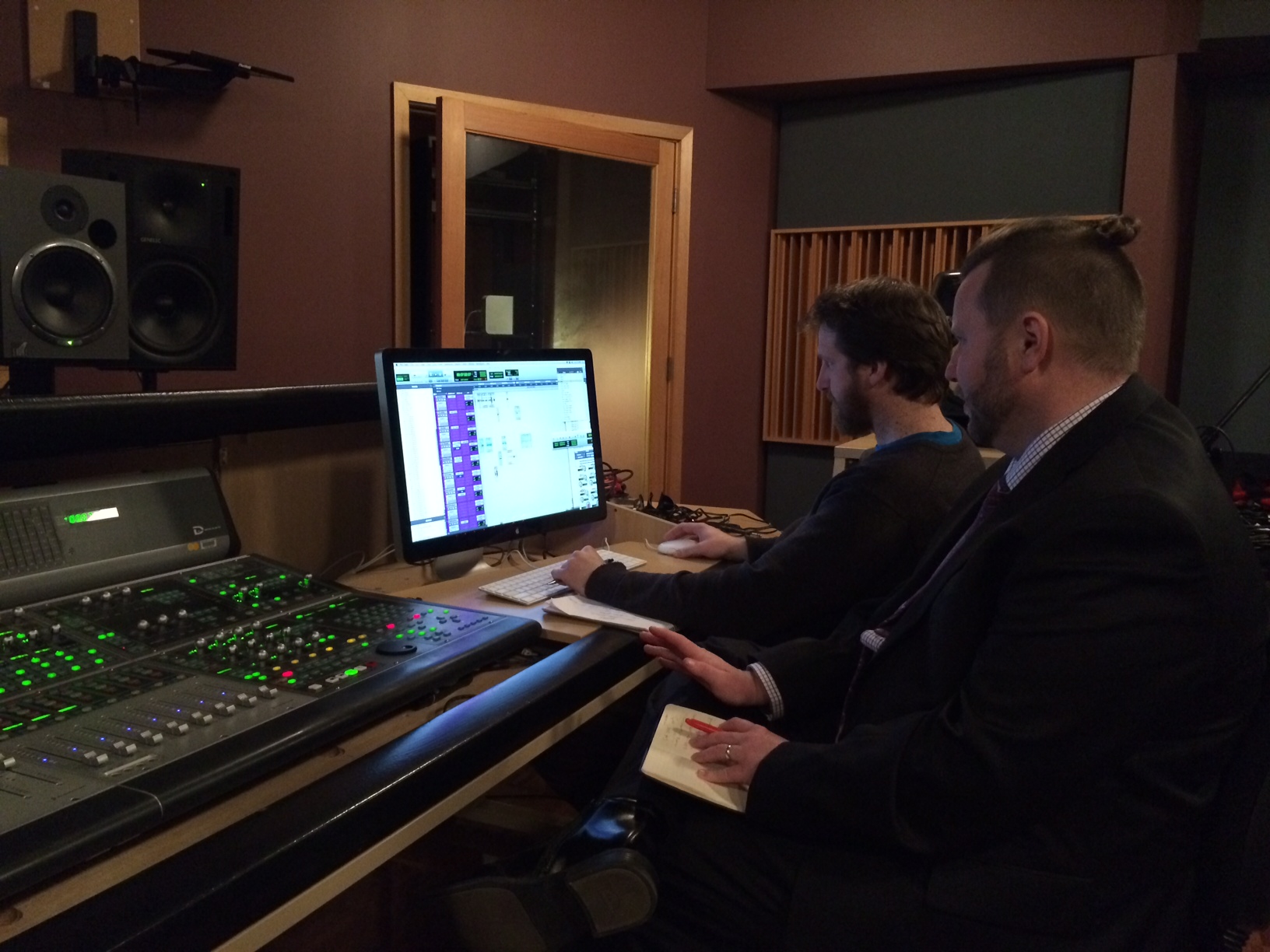
Last night, Tim Duck, Lou and I sat down and listened to the finalised sound mix for The Real. It was a momentous occasion, one of the final stages of post-production. As we near completion, I’m really trying to savour these moments.
By my standards, it has taken forever. In the same time period, I’ve also shot five music videos, participated in the You Are Here festival, set up a whole new band that’s signed to a record label and has 19 original songs (and is on to our third drummer…), and travelled to Peru/Argentina/Chile/Brazil/Iceland/Netherlands/USA. I like to work quickly, and move from one thing straight to the next – in addition to all of the technical and management skills The Real has taught me, it’s also teaching me patience.
Photos by Louise McGrath
And this is just the first stage – once the pilot is complete, the more challenging next phase is to present it to industry. But right now, after hearing what Tim and his class have done, I’m going to be on a high all week.
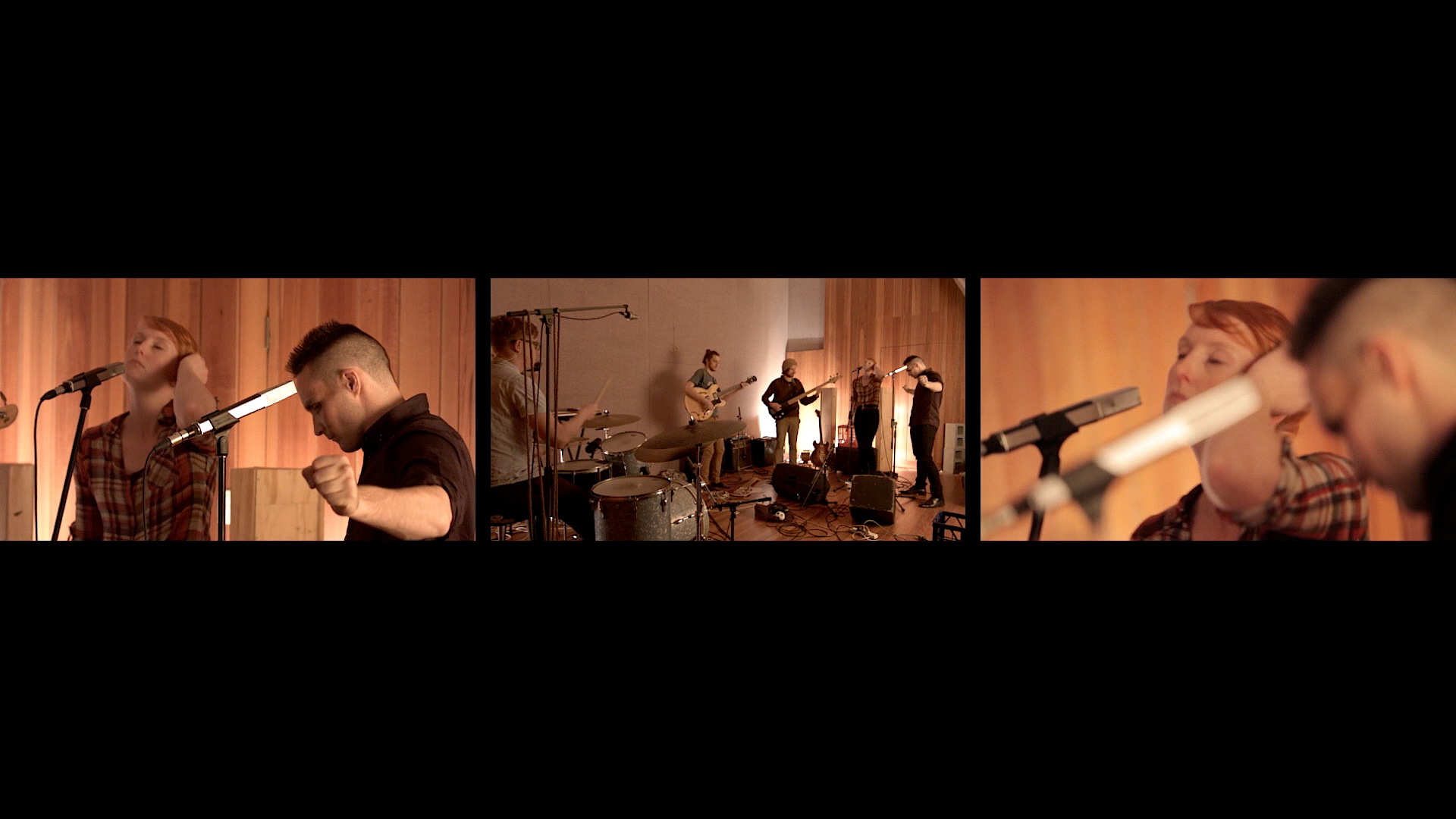
I turn down most offers to film live music, but when Nick asked and explained the concept, I had to say ‘yes’. When he told me he had also brought Shane Parsons on board I suggested we go all out and get as many cameras as we could. We wrangled a couple of extras (with Sam King’s gracious assistance), and were good to go.
On the day, filming was surprisingly straightforward. Adam Thomas was brought in as photographer, but ended up doing double duty, manning our static cameras. Shane is an Energiser Bunny when it comes to filming, constantly on the move, picking up shots from any angle he can find. I prefer to concentrate on focus shifts and steady panning shots, letting the edit provide the momentum. Between the two of us, we get the best of both worlds.
The split-screen effects and widescreen aspect ratio make the edit for me – it was a chance to use more of the footage, and to present it in a cinematic context. Nick and I are discussing other approaches for the remaining videos, but for this initial foray I tried to leave the footage as close to how it looked in the room, to preserve the intimacy we had on the day.
Thankfully, the release schedule isn’t Heartbroken Assassin pace – we’ll be releasing a video every week or so from now.
Like camping, the last couple of weeks have been intense. I’ve been running on coffee and to-do lists scribbled on post-it notes.
In addition to prepping, recording and overseeing a 10 song EP for Faux Faux Amis, we’ve also had to find a new drummer and bring them up to speed for the upcoming launch. If that wasn’t enough on the FFA front, we are making videos for all ten, so I’ve been meeting with and coordinating artists, filmmakers, writers and animators to bring on board. Oh, and I’ve been working with Paul Heslin on a remix for Holiday Inn (nowwith added saxophone!).
During this same period, I also took on two filmmaking projects – a promo for a magazine, and a music video for another band (which, in many ways, was our most ambitious yet). Both were more challenging than I anticipated – there were cancelled shoots, wardrobe calamities, re-shoots, and lots and lots of editing. This weekend, I’m going to Sydney to colour-grade The Real. After that, I’m hoping things will quieten down. I’m in the enviable position of having to say ‘no’ to things in the latter half of this year, so that I can concentrate on progressing a few longstanding projects (mostly I’m aware I haven’t been writing enough).
All of which is to say there’ll be a lot of stuff coming out from me soon. I like to use this blog to talk process and catalogue triumphs, but this time I want to record how overwhelming it sometimes gets pursuing so many creative endeavours (I work full time too). I love my life and thrive on being busy, but like the runner who forgets the agony as soon as he crosses the finish line, I won’t remember this feeling soon. I want this post as a reminder next time I say ‘yes’ to too many things at once.
I met with Sam and Oscar from the label a few months ago and we bonded over ideas about performance, prolificacy, and to paraphrase The Streets, “pushing things forward”. Early Music’s output is eclectic, including Canberra’s best vocal artist Aphir, big-in-Japan glitch-hoppers Gunwaif, jazz-flecked abstract beatmaker Stenxh, and acoustic folksters Northumberland – we are their first punk band, and both sides are excited about the possibilities.
Our first release will be for their winter/fall schedule – an EP of all-new material entitled X. The elevator pitch is this: ten songs, all a minute long.
Photo by Tiffany Gleeson (Catherine, Mel and Nick Peddle not pictured)
Writing short songs is not unusual for me – the Shine Tarts pieces were all brief, and my songs rarely include dead weight like, say, middle eights or third verses. I’ve always had a fondness for albums that include fragments and pieces – Money Mark, Cody ChestnuTT, and Badly Drawn Boy spring to mind.
But I didn’t want fragments on X – I agree with Chuck Klosterman when he wrote that he can look at an album’s track-listing, find the shortest song, and be confident that will be his favourite. I treated each song on X as if it was that one awesome short song on a regular album. It’s a microcosm of our standard set – there’s the occasional odd time signature, some French lyrics, hummable solos, a couple of in-jokes, and lots of backing vocals. All of these songs could be “full-length”* – it feels decadent to blow them in ten minutes.
Early Music are big on multimedia outputs and cross-pollination between their artists – I’m keen to get involved with that aspect of being on a label, and looking forward to sharing the results. We start recording this weekend!
We are also planning a staggered release of videos for each of the ten songs – excitedly I’ve begun to enlist writers, animators and artists to come on board – basically either people I love working with, or people I wanted to work with – the list so far includes Tom Woodward, Nick Delatovic, Emma Gibson and Joel Barcham.
* Well, except one song, but more on that another time…















 Lick Nuke